Infrastructure has always been shaped by the demands of its time.
For decades, the emphasis was understandably placed upon structural performance, longevity and cost. Concrete, steel and synthetic materials became the default choice for many applications, offering predictable engineering characteristics and widespread availability. Whilst these materials continue to play a vital role in modern construction, the challenges facing today’s infrastructure are considerably more complex than those of previous generations.
Climate resilience, biodiversity, environmental stewardship and carbon reduction have moved from desirable aspirations to fundamental project requirements. Engineers, contractors and asset owners are increasingly expected to deliver infrastructure that performs not only technically, but also environmentally.
This evolution is changing the way erosion control is approached.
Rather than relying solely on permanent engineered materials, many projects are now incorporating nature-based solutions that work alongside natural processes to deliver both engineering performance and ecological value.
Engineering With Nature
Nature-based erosion control is often misunderstood as being a softer alternative to conventional engineering. In reality, it represents a carefully considered engineering approach that recognises the strengths of natural systems.
The objective is not to replace engineering, but to use natural processes wherever they can achieve the required outcome safely and effectively.
Vegetation is one of the most efficient long-term erosion control systems available. Healthy root networks bind soil, reduce surface runoff, improve infiltration and significantly increase slope stability over time. The challenge has always been protecting vulnerable soils during the period before vegetation becomes fully established.
This is where natural fibre erosion control systems have become increasingly important.
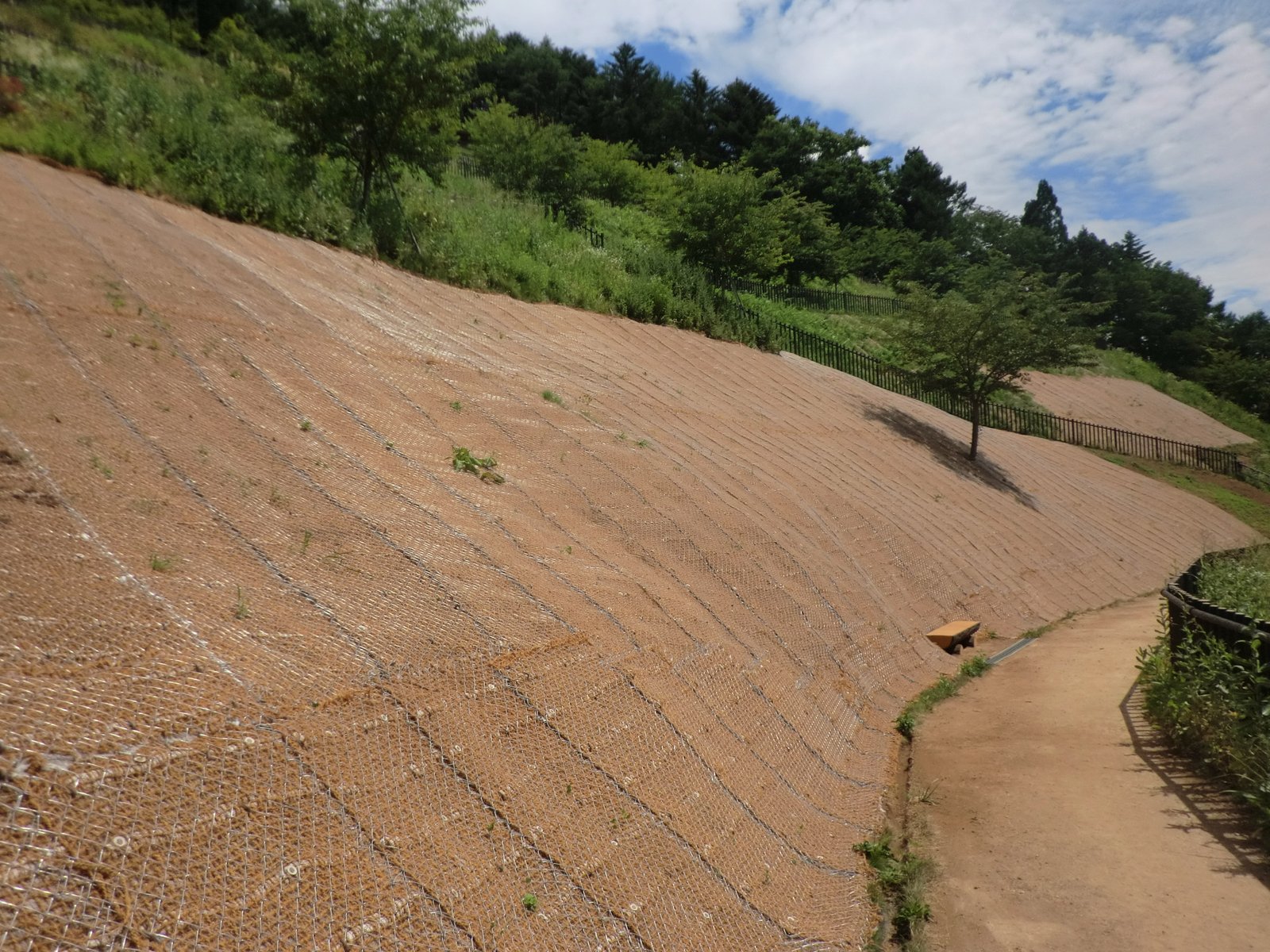
Materials such as coir and jute provide temporary reinforcement during the critical establishment phase, helping to protect exposed soils from rainfall, surface runoff and wind erosion whilst allowing vegetation to develop naturally. Once their role has been fulfilled, they gradually biodegrade without leaving permanent synthetic materials within the landscape.
A Changing Infrastructure Landscape
Across the United Kingdom and internationally, infrastructure clients are placing greater emphasis on sustainable construction practices.
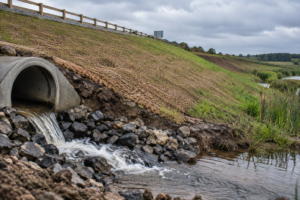
Highway embankments, railway cuttings, drainage corridors, river restoration schemes, flood alleviation projects and ecological enhancement works are increasingly expected to deliver wider environmental benefits alongside their primary engineering function.
This shift has been influenced by several factors.
Biodiversity Net Gain
Environmental legislation and planning policy are encouraging projects to deliver measurable improvements to biodiversity rather than simply minimising environmental impact.
Natural fibre erosion control systems support vegetation establishment, habitat creation and ecological recovery without introducing permanent plastic materials into sensitive environments.
Climate Resilience
More frequent periods of intense rainfall place greater pressure on slopes, drainage systems and watercourses.
Protecting exposed soils immediately following construction has become increasingly important in reducing sediment loss, maintaining drainage performance and supporting long-term landscape stability.
Temporary erosion control systems provide protection during the period when newly seeded areas are at their most vulnerable.
Carbon Reduction
Infrastructure organisations are actively seeking opportunities to reduce embodied carbon and minimise environmental impact throughout the construction process.
Whilst every project requires careful engineering assessment, replacing permanent synthetic erosion control materials with biodegradable natural alternatives can contribute towards broader sustainability objectives where technically appropriate.
Performance Remains Paramount
One misconception surrounding nature-based engineering is that environmental performance comes at the expense of technical performance.
The reality is rather different.
Natural fibre systems are selected because they satisfy a clearly defined engineering function.
Their role is to provide temporary surface stabilisation, reduce soil loss, moderate surface water flow and create favourable conditions for successful vegetation establishment.
Once vegetation has matured, the root system itself becomes the primary means of long-term reinforcement, allowing the biodegradable material to naturally decompose.
The engineering objective has been achieved.
Rather than remaining within the ground indefinitely, the material simply completes its intended lifecycle.
Where Natural Fibre Systems Are Being Used
Today, biodegradable erosion control products are routinely incorporated into a broad range of infrastructure and environmental projects, including:
- Highway embankments and roadside earthworks
- Railway cuttings and slopes
- Drainage channels and swales
- Riverbanks and watercourse restoration
- Flood alleviation schemes
- Wetland creation and habitat enhancement
- Land restoration and ecological rehabilitation
- Utility corridors and reinstatement works
- Coastal and estuarine restoration
- Landscape and environmental improvement projects
The suitability of any erosion control solution will always depend upon site conditions, design requirements and project objectives. However, the increasing adoption of natural fibre systems demonstrates that they have become an established component of the engineer’s toolkit rather than a niche environmental product.
Supporting Nature-Based Engineering
A range of biodegradable systems is now available to address different engineering challenges.
Coir Netting provides surface stabilisation on slopes and embankments, helping to reduce erosion whilst supporting vegetation establishment.
Coir Erosion Control Blankets offer enhanced surface protection where rapid establishment and increased soil retention are required.
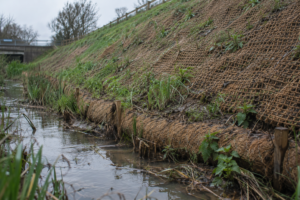
Coir Logs are widely used within river restoration, drainage channels and watercourse protection, helping to reduce bank erosion whilst encouraging natural vegetation growth.
Coir Pallets provide an effective solution for wetland creation, marginal planting and ecological restoration, supporting both habitat development and bank stabilisation.
Each system performs a different function, but they share the same underlying principle: delivering engineering performance during the period it is required before naturally returning to the environment.
Looking Ahead
Infrastructure is entering a period of significant transition.
The industry is being asked to deliver projects that are more resilient, more sustainable and more environmentally responsible than ever before. Success will increasingly depend upon selecting solutions that achieve technical objectives whilst contributing positively to the wider landscape.
Nature-based erosion control is no longer viewed as an alternative approach reserved solely for ecological projects. It has become an established engineering practice that complements conventional construction techniques and supports the long-term performance of infrastructure assets.
For engineers, designers and contractors, the question is no longer whether natural fibre solutions have a place within modern infrastructure.
The question is where they can provide the greatest value.