For much of modern infrastructure history, the primary objective of engineering was clear: minimise environmental disruption while delivering functional, durable assets.
Today, that expectation is evolving.
Across the UK and international infrastructure sectors, a growing number of engineers, planners and environmental specialists are beginning to ask a more ambitious question not simply how to reduce harm, but whether infrastructure projects can actively contribute to ecological improvement and long term landscape recovery.
This is the principle increasingly described as regenerative infrastructure.
The concept moves beyond traditional sustainability models focused solely on mitigation or impact reduction. Instead, regenerative approaches aim to deliver infrastructure that strengthens ecosystems, restores degraded landscapes and improves environmental resilience over time.
For the erosion control and geotechnical sectors, this shift is becoming increasingly significant.
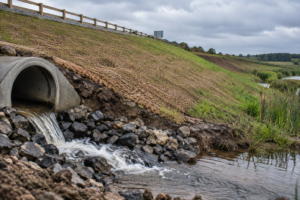
Earthworks, slope stabilisation and land development projects inevitably alter natural environments. Historically, the emphasis was often placed on controlling erosion, managing runoff and stabilising disturbed ground as efficiently as possible following construction activity. While these objectives remain essential, the wider industry is gradually recognising that erosion control systems can also influence long-term ecological outcomes far beyond immediate engineering performance.
This is particularly relevant during the recovery phase following land disturbance.
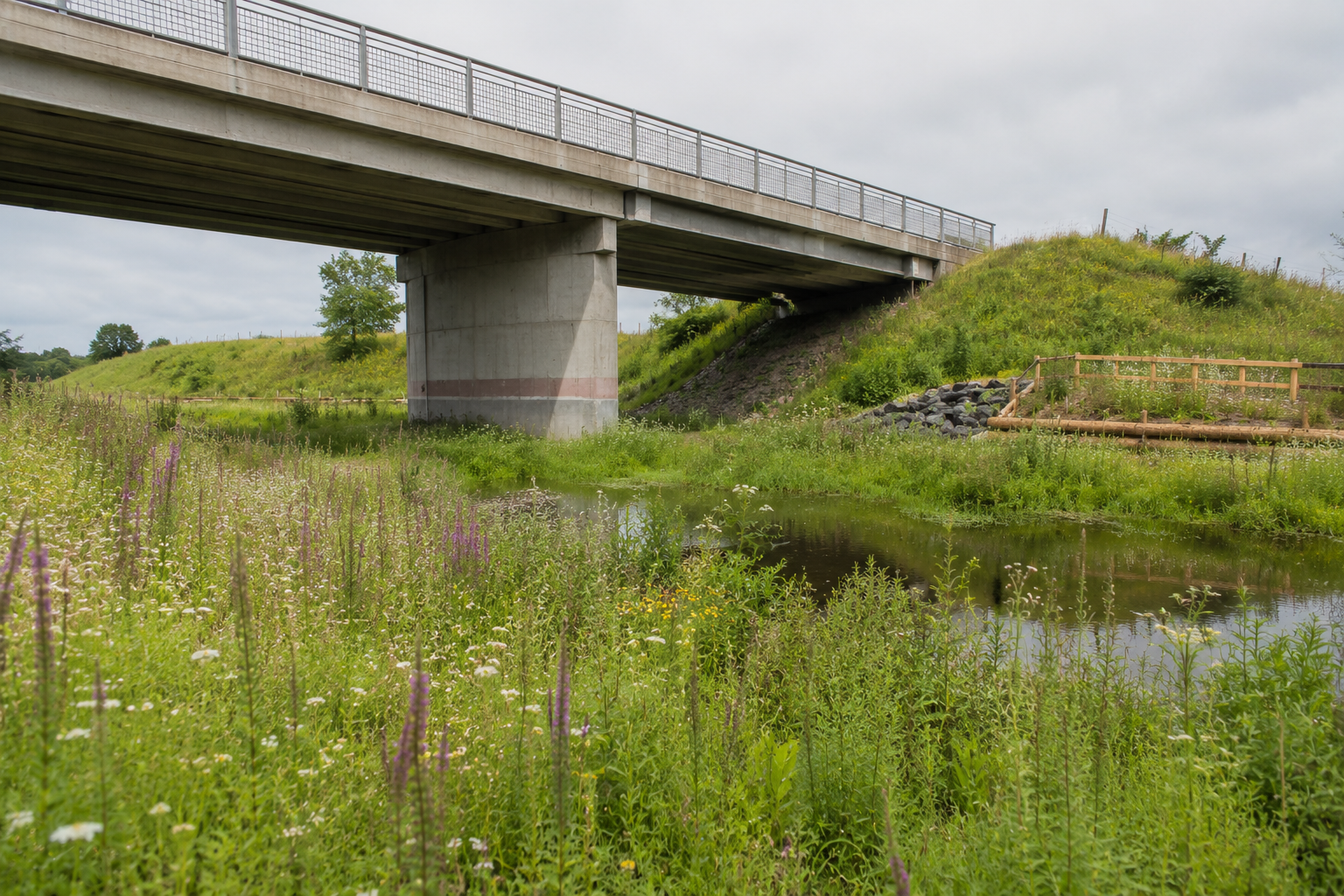
Newly formed embankments, river corridors, flood storage areas and restoration sites are often highly vulnerable to soil loss, vegetation failure and hydrological instability during the first months and years after construction. The materials and engineering approaches introduced during this period can significantly affect whether landscapes recover successfully or continue to degrade over time.
Regenerative infrastructure approaches seek to support natural recovery processes rather than merely containing environmental damage.
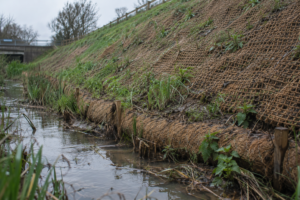
Natural fibre erosion control systems such as coir netting, coir blankets and coir logs are increasingly being integrated into projects where long term ecological establishment forms part of the engineering strategy. By stabilising soils during vulnerable phases while simultaneously supporting vegetation growth and ecological integration, these systems can contribute to landscape recovery beyond their immediate erosion control function.
Importantly, regeneration within infrastructure delivery is not limited to biodiversity alone.
Healthy vegetation establishment improves slope resilience, enhances moisture retention, supports carbon sequestration and strengthens long term landscape stability. River restoration projects can improve aquatic habitats while simultaneously reducing erosion risk. Floodplain enhancement schemes can contribute to both climate resilience and ecological recovery. In many cases, environmental improvement and engineering performance are becoming increasingly interconnected rather than separate objectives.
This reflects a wider shift within infrastructure thinking.
Public authorities, infrastructure owners and major contractors are increasingly under pressure to demonstrate measurable environmental value alongside technical delivery. Net Zero commitments, Biodiversity Net Gain requirements and ESG led procurement frameworks are all encouraging projects that contribute positively to long-term environmental conditions rather than simply minimising visible impact.
At the same time, public expectations surrounding infrastructure are changing.
Communities increasingly expect projects to integrate more naturally into landscapes, contribute to environmental quality and support broader ecological resilience. Infrastructure is no longer viewed solely as a functional intervention within the landscape, but as something capable of shaping the long term condition of that landscape itself.
For the geotechnical sector, this creates both opportunity and responsibility.
The future of erosion control and land stabilisation is unlikely to be defined purely by containment and protection. Increasingly, success will also be measured by whether infrastructure interventions leave ecosystems healthier, landscapes more resilient and environmental conditions stronger than they were before construction began.
Regenerative infrastructure therefore represents more than an environmental aspiration. It signals a broader evolution in how engineering itself is understood not simply as a means of building within the environment, but as a means of helping restore it.