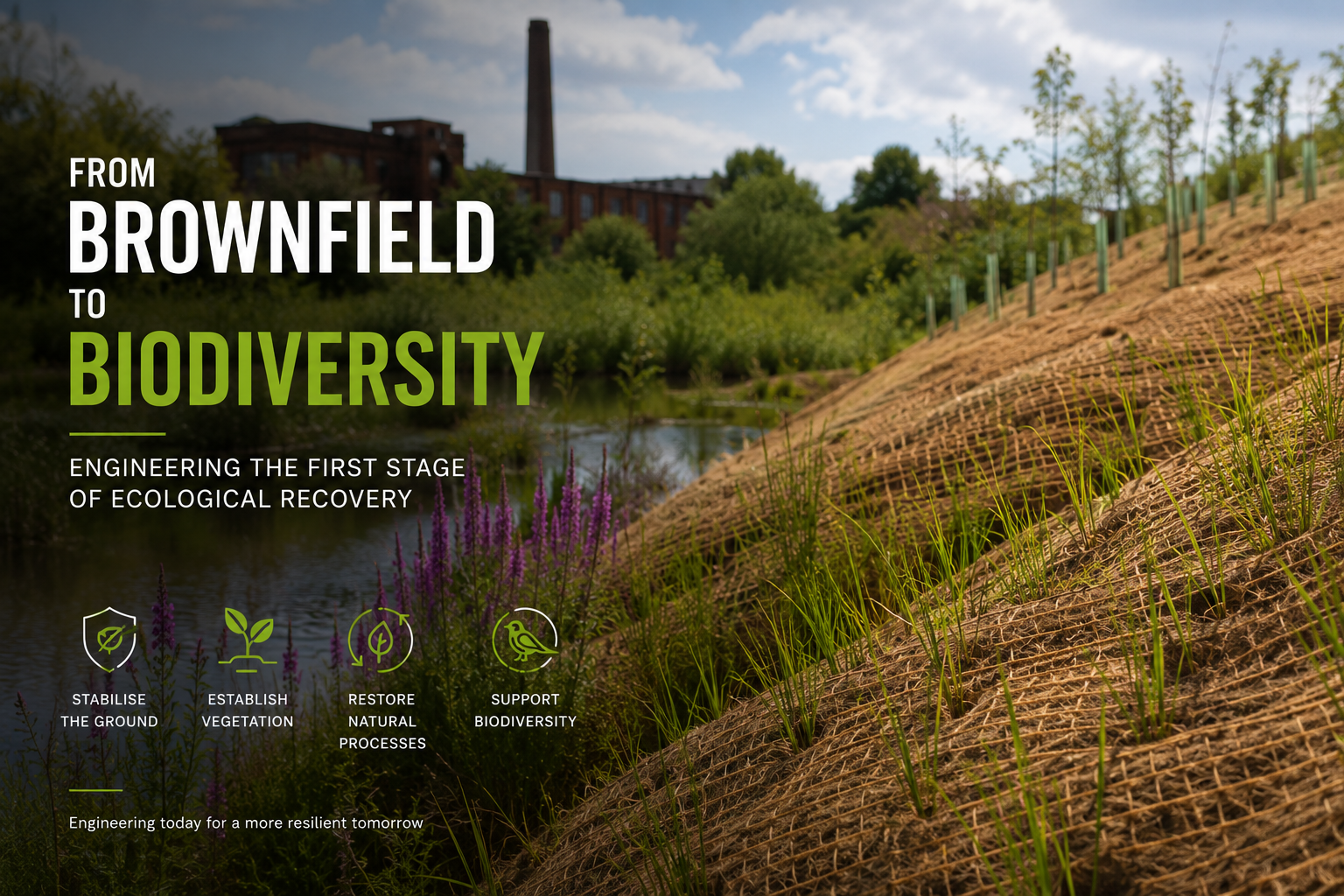
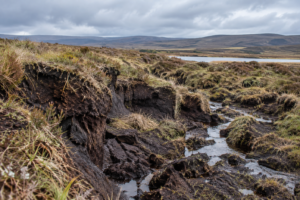
Across the UK, brownfield land is increasingly being viewed as an opportunity rather than a constraint.
Former industrial sites, disused infrastructure corridors, redundant commercial land and previously developed areas are playing an important role in addressing housing demand, supporting infrastructure investment and delivering environmental enhancement projects. At the same time, planning policy and biodiversity objectives are placing greater emphasis on how these sites contribute to ecological recovery and long-term environmental value.
Yet before habitats can establish, before biodiversity can increase and before landscapes can recover, a more fundamental challenge must first be addressed.
The ground itself must become stable.
Whilst ecological outcomes often dominate discussions surrounding brownfield regeneration, successful environmental recovery begins with engineering. Creating the conditions that allow vegetation to establish and thrive is frequently the first and most important stage of the restoration process.
The Growing Importance of Brownfield Redevelopment
Brownfield sites form a significant part of the UK’s future development landscape.
Many former industrial and previously developed sites occupy strategically important locations close to existing infrastructure and urban centres. Redeveloping these areas can reduce pressure on undeveloped land whilst bringing neglected landscapes back into productive use.
Not all brownfield projects, however, are intended for commercial or residential development.
Many sites are being transformed into public open space, community habitats, ecological corridors, wetlands and biodiversity enhancement areas. In these cases, the objective is not simply redevelopment, but environmental recovery.
Achieving that recovery requires careful management of the landscape during its most vulnerable phase.
Understanding Soil Loss Risks on Disturbed Land
Brownfield sites often present challenging ground conditions.
Years of industrial activity, previous excavation works, imported materials, compaction and vegetation clearance can leave surfaces exposed and susceptible to erosion. Newly regraded areas may be particularly vulnerable during the period immediately following construction or remediation works.
Rainfall impact, concentrated runoff and wind erosion can all contribute to soil loss.
The consequences extend beyond simple surface degradation.
Erosion can remove valuable growing media, damage newly established planting, transport sediment into drainage systems and undermine wider landscape restoration objectives. In severe cases, soil loss can delay recovery programmes and increase maintenance requirements throughout the early stages of site establishment.
For project teams seeking long-term ecological outcomes, protecting the surface during this period becomes a critical priority.
Why Vegetation Establishment Often Determines Project Success
Successful ecological recovery relies upon vegetation becoming established quickly and effectively.
Plants perform a range of important functions within recovering landscapes. Root systems reinforce soils, improve infiltration, reduce runoff velocity and contribute to long-term slope stability. Vegetation also provides the foundation upon which wider ecological communities can develop.
However, newly seeded areas are inherently vulnerable.
Young plants possess limited root development and often face competition from environmental conditions that can prevent successful establishment. Heavy rainfall, drought conditions and surface instability can all reduce germination success and slow ecological recovery.
The period between seeding and mature vegetation establishment is frequently the most critical phase within any restoration programme.
It is during this window that temporary engineering measures can have the greatest influence on long-term project outcomes.
Surface Stabilisation as a Foundation for Ecological Recovery
Surface stabilisation is often associated with construction projects and earthworks. However, its role within environmental restoration is equally important.
The objective is not to prevent natural processes from occurring.
Rather, it is to manage those processes until the landscape becomes capable of supporting itself.
By reducing soil displacement and limiting surface erosion, stabilisation measures help preserve growing media, maintain seed contact with the soil and improve the conditions required for vegetation establishment.
This creates a more favourable environment for ecological recovery whilst reducing the likelihood of remedial intervention later in the project lifecycle.
In effect, stabilisation provides the bridge between engineering works and natural regeneration.
Supporting Biodiversity Objectives Through Early-Stage Engineering
Biodiversity targets have become an increasingly important consideration across development and restoration projects.
However, biodiversity cannot be delivered simply through planting schedules or habitat design plans. The physical environment must first be capable of supporting those objectives.
Stable ground conditions help ensure that seed mixes remain in place, vegetation establishes successfully and habitats can mature as intended. By reducing the risk of erosion and surface degradation, early-stage engineering interventions contribute directly to the long-term success of biodiversity enhancement measures.
This relationship is often overlooked.
Engineering and ecology are sometimes treated as separate disciplines within project delivery, yet the reality is that successful biodiversity outcomes frequently depend upon effective engineering during the earliest phases of site recovery.
The Role of Natural Fibre Erosion Control Systems
Natural fibre erosion control systems are increasingly being used to support vegetation establishment and surface stabilisation across brownfield regeneration projects.
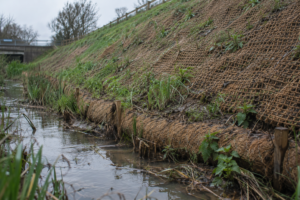
Materials such as coir netting and jute geotextiles provide temporary protection during the period when soils are most vulnerable. These systems help reduce erosion, encourage moisture retention and support the establishment of vegetation without creating permanent barriers within the recovering landscape.
Their functional lifespan aligns closely with the recovery process itself.
As root systems develop and vegetation matures, the landscape progressively assumes responsibility for its own stability. The temporary engineering solution gradually becomes less important as natural resilience increases.
For many restoration projects, this creates a practical balance between short-term performance and long-term environmental integration.
Looking Beyond Development
The future of brownfield regeneration extends beyond redevelopment alone.
Increasingly, projects are being evaluated not only by what is built, but by the environmental value they create. Habitat enhancement, ecological resilience and biodiversity performance are becoming important measures of project success.
Achieving these outcomes requires more than ecological ambition.
It requires an understanding that successful environmental recovery begins with stable ground, protected soils and effective vegetation establishment.
Before biodiversity can flourish, the landscape must first be given the opportunity to recover.
Engineering remains the first stage of that journey.