As infrastructure delivery increasingly aligns with Net Zero commitments, embodied carbon is moving from a secondary environmental consideration to a central engineering and procurement priority. Across transport, utilities, flood defence and land remediation projects, material selection is now under greater scrutiny than ever before.
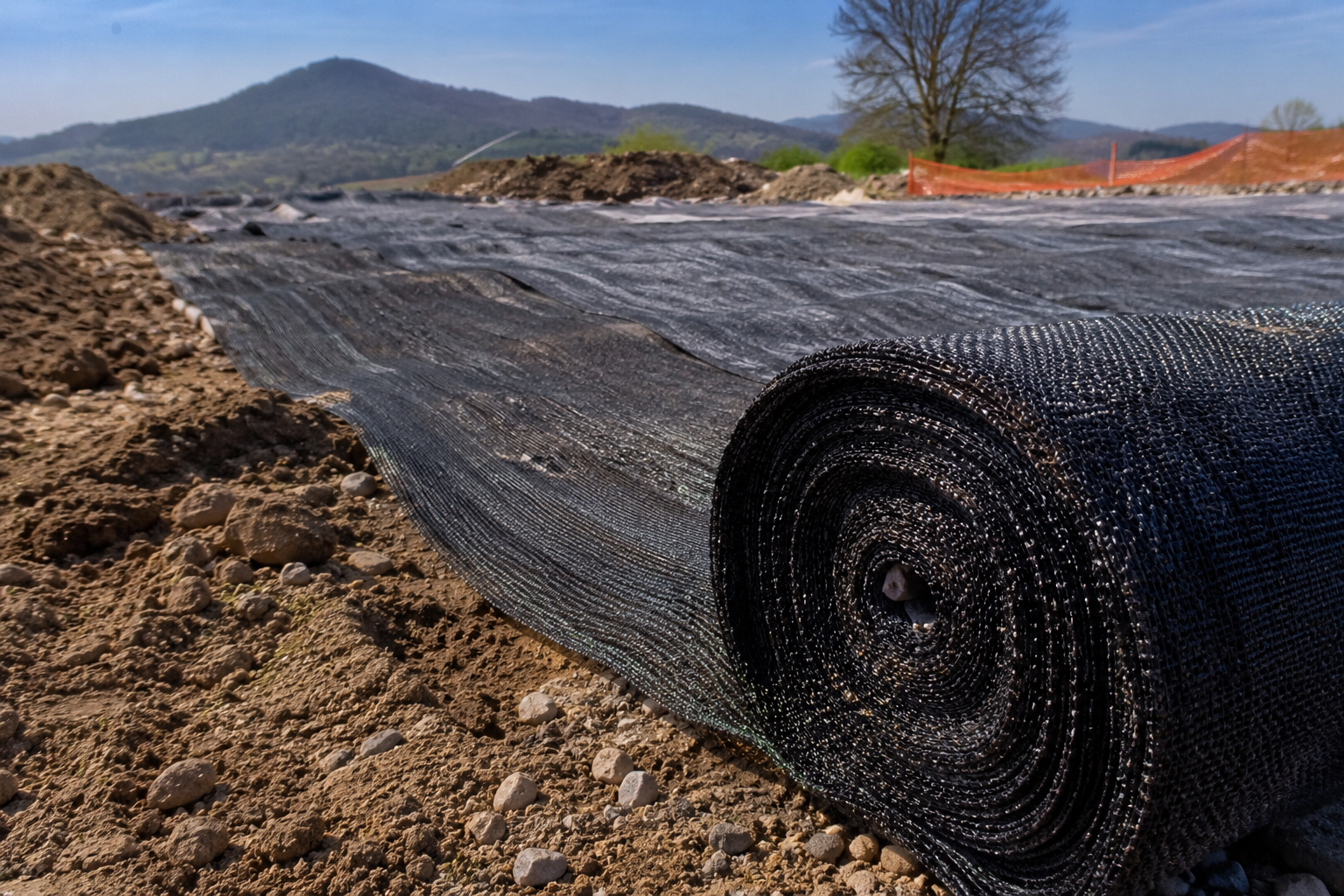
Yet within erosion control and geotechnical engineering, one area often overlooked in carbon discussions is the widespread use of synthetic geotextiles.
For decades, polymer based erosion control systems have formed part of standard specification practices across civil engineering projects. Their familiarity within the market, combined with assumptions around durability and consistency, has allowed synthetic materials to dominate large parts of the sector. However, the environmental implications associated with these systems are becoming increasingly difficult to ignore.
Most synthetic erosion control products rely heavily on petrochemical derived polymers, including polypropylene and polyethylene. The extraction, refinement and manufacturing processes associated with these materials are energy intensive and carbon intensive by nature. Beyond production itself, transportation impacts, long distance supply chains and end-of-life disposal further increase their overall environmental burden.
As carbon accounting methodologies become more sophisticated, infrastructure clients are beginning to assess materials beyond initial installation performance alone.
This shift is particularly relevant under evolving frameworks such as PAS 2080, where whole-life carbon management is becoming embedded within infrastructure decision making. Increasingly, project teams are being asked not only how materials perform technically, but also what environmental legacy they leave behind over the lifespan of an asset.
In many temporary erosion control applications, this creates an important engineering question: does the material lifespan genuinely need to exceed the functional lifespan of the application itself?
In numerous scenarios, erosion control systems are required primarily during the critical vegetation establishment phase. Once root systems mature and ecological stability develops naturally, the functional role of the surface protection layer reduces significantly. Yet many synthetic systems remain within the environment indefinitely long after their engineering purpose has expired.
This is where natural fibre erosion control systems are gaining renewed attention within the sector.
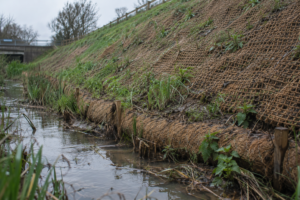
Coir based erosion control blankets, coir netting and other biodegradable geotextiles offer an alternative approach rooted in proportional engineering. Rather than resisting environmental integration, these systems are designed to support vegetation establishment, stabilise exposed soils during vulnerable early phases and gradually biodegrade as long-term ecological resilience develops.
Importantly, this is not simply an environmental argument. It is increasingly a strategic infrastructure argument.
Public sector procurement frameworks, major contractors and infrastructure owners are under mounting pressure to demonstrate measurable carbon reduction, sustainable sourcing practices and responsible lifecycle management. Material selection is therefore becoming closely linked to tender competitiveness, ESG scoring and long term reputational performance.
The future of erosion control and geotechnical engineering will not be defined solely by structural performance in isolation. It will also be shaped by how intelligently the industry balances engineering functionality, ecological integration and carbon responsibility.
As infrastructure projects evolve towards lower carbon delivery models, the hidden carbon cost of synthetic geotextiles is unlikely to remain hidden for much longer.