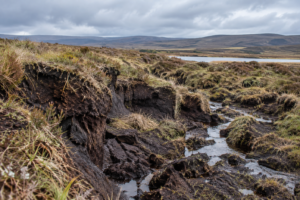
Healthy rivers are rarely the result of chance.
They are shaped by natural processes that have evolved over thousands of years, constantly adapting to changing water levels, seasonal flows and the surrounding landscape. When these natural processes are interrupted through development, altered land use or engineered modification, rivers can become increasingly vulnerable to erosion, habitat loss and declining ecological quality.
For many years, river management focused primarily on controlling water.
Today, the emphasis is shifting towards restoring natural function.
Across the United Kingdom, organisations such as the Environment Agency, Rivers Trusts, local authorities, water companies and environmental contractors are increasingly adopting nature-based approaches that seek to work with natural processes rather than simply resisting them.
River restoration has become as much about creating resilient ecosystems as it is about protecting infrastructure.
Rivers Are Dynamic by Nature
No river remains static.
Water levels fluctuate, sediment is transported downstream, banks naturally adjust and vegetation responds to seasonal change. These processes are essential components of healthy river systems.
Problems often arise when natural dynamics become unbalanced.
Loss of vegetation, increased surface runoff, altered flow patterns and previous engineering interventions can accelerate riverbank erosion beyond its natural rate. Over time, banks begin to retreat, sediment enters the watercourse, valuable habitats are lost and adjacent infrastructure may become increasingly exposed.
The challenge is not always to prevent change.
Rather, it is to guide natural processes towards a stable and sustainable condition.
Understanding Riverbank Erosion
Riverbank erosion is often perceived as a single issue, yet its causes are varied and frequently interconnected.
High flow velocities, fluctuating water levels, livestock access, wave action, poor vegetation cover and concentrated surface runoff can all contribute to the gradual breakdown of riverbanks.
Whilst some erosion forms part of a healthy river’s natural evolution, excessive erosion presents wider environmental and engineering concerns.
These may include:
- Loss of valuable topsoil
- Increased sediment entering watercourses
- Reduced water quality
- Damage to habitats
- Undermining of footpaths, embankments and adjacent infrastructure
- Higher long-term maintenance costs
Successful restoration therefore requires an approach that considers both hydraulic performance and ecological recovery.
Sediment Control Begins at the Source
Sediment is a natural component of every river system.
However, excessive sediment entering a watercourse can significantly affect ecological health.
Fine particles suspended within the water reduce light penetration, smother spawning gravels, alter aquatic habitats and increase maintenance requirements for downstream assets.
Controlling sediment at the point where erosion occurs is generally more effective than attempting to manage it once it has entered the river.
Stabilising vulnerable banks whilst allowing natural vegetation to establish helps reduce soil loss without preventing the river from functioning as a living ecosystem.
Habitat Creation Is Now Central to River Engineering
Modern river restoration extends well beyond stabilising the bank itself.
Increasingly, projects seek to create diverse habitats capable of supporting wildlife throughout the year.
Marginal vegetation provides shelter for juvenile fish, nesting opportunities for birds, food sources for invertebrates and improved ecological connectivity along river corridors.
Healthy root systems also contribute to long-term bank stability by reinforcing soils naturally whilst improving infiltration and reducing surface runoff.
The objective is no longer simply to protect the riverbank.
It is to restore ecological function.
Supporting Fish and Aquatic Wildlife
Many freshwater species depend upon stable, well-vegetated river margins.
Overhanging vegetation provides shade that helps regulate water temperature during warmer months. Root systems create refuge from strong flows, whilst submerged vegetation offers valuable habitat for fish, amphibians and aquatic invertebrates.
Where riverbanks have become heavily eroded or artificially hardened, these habitats are often significantly reduced.
Nature-based restoration seeks to reverse this decline by encouraging vegetation to re-establish naturally whilst protecting vulnerable soils during the critical establishment period.
Wetland Restoration and Natural Flood Management
Wetlands are among the most valuable ecosystems within the British landscape.
They store floodwater, improve water quality, capture carbon, support biodiversity and provide important ecological connections between rivers and surrounding habitats.
Many restoration projects now incorporate wetlands as part of wider catchment management strategies, recognising that slowing water naturally can often provide more sustainable outcomes than relying solely upon conventional engineering structures.
Natural fibre systems are increasingly being used within these schemes because they support vegetation establishment whilst gradually integrating into the surrounding environment.
Engineering That Works With Natural Processes
Nature-based engineering does not seek to replace conventional engineering.
Rather, it complements traditional approaches by recognising where natural processes can provide sustainable long-term solutions.
Temporary biodegradable systems help create favourable conditions for vegetation to establish, allowing root networks to become the primary source of long-term reinforcement.
As vegetation develops, the engineered natural fibre system gradually completes its role before biodegrading naturally.
The landscape itself becomes the long-term solution.
Natural Fibre Solutions for River Restoration
A range of biodegradable systems now supports river restoration, bank protection and wetland creation across infrastructure and environmental projects.
Coir Logs
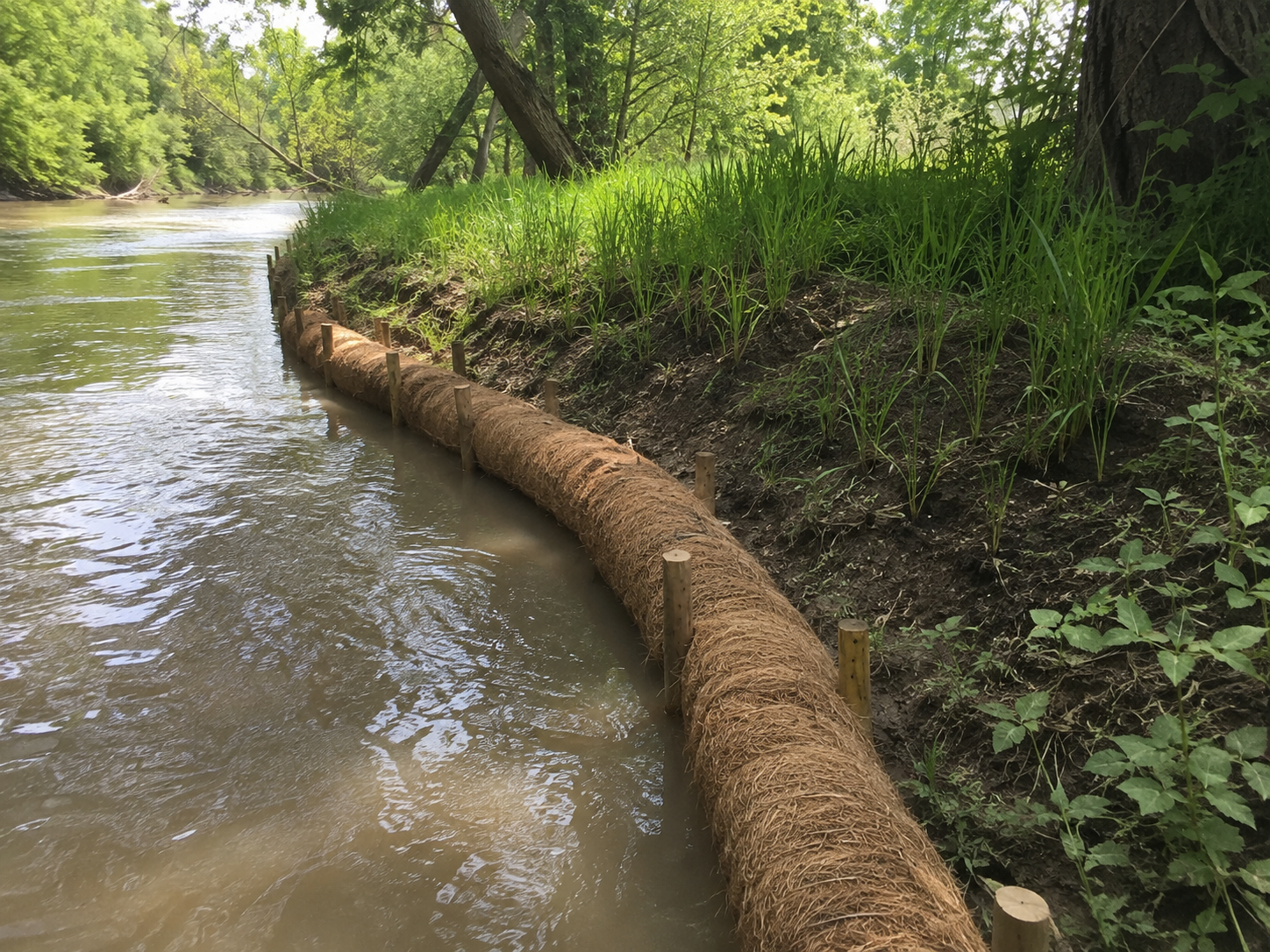
Coir logs provide immediate protection along vulnerable riverbanks, drainage channels and lake margins.
Their dense natural fibre construction helps reduce bank erosion, slow localised water velocities and retain soils whilst vegetation becomes established.
Over time, plant roots develop through and around the coir, creating a naturally reinforced bank.
Pre-Planted Coir Logs
Pre-planted coir logs combine erosion protection with immediate vegetation establishment.
Supplied with carefully selected marginal aquatic plants, they provide an efficient solution where rapid habitat creation and ecological enhancement are important project objectives.
They are particularly suited to river restoration, wetland creation, balancing ponds and sustainable drainage schemes.
Coir Pallets
Coir pallets create stable planting platforms within shallow water and marginal environments.
They support wetland vegetation, encourage biodiversity and assist in establishing robust root systems that contribute to long-term bank stability.
They are widely used in habitat creation, ecological compensation and watercourse enhancement projects.
Coir Netting
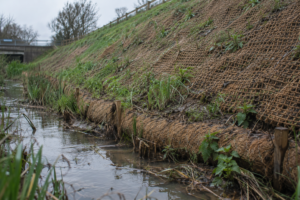
On adjacent embankments and riverbanks, machine-woven coir netting provides temporary surface stabilisation whilst allowing seeded vegetation to establish naturally.
The open weave encourages plant growth through the material, helping create a stable vegetated surface capable of resisting future erosion.
A Different Way of Thinking About Rivers
Perhaps the greatest change in river engineering is philosophical rather than technical.
Historically, many schemes sought to control rivers through increasingly rigid infrastructure.
Modern restoration increasingly recognises that resilient rivers are those permitted to function as natural systems wherever practicable.
Working with natural processes often delivers broader environmental benefits alongside effective engineering performance.
It supports biodiversity.
It improves water quality.
It enhances climate resilience.
And it creates river corridors capable of adapting naturally over time.
Looking Ahead
As pressures from climate change, flooding and biodiversity loss continue to grow, river restoration will play an increasingly important role in the delivery of resilient infrastructure.
Nature-based engineering is no longer considered a specialist discipline reserved for environmental projects alone. It has become an established component of modern river management, balancing technical performance with ecological responsibility.
The most successful restoration schemes are rarely those that attempt to overpower nature.
More often, they are those that understand it.
Frequently Asked Questions
Why is riverbank erosion a concern?
Excessive riverbank erosion can lead to the loss of topsoil, increased sediment within watercourses, reduced water quality, habitat degradation and damage to nearby infrastructure.
What are coir logs used for?
Coir logs provide temporary bank protection while encouraging vegetation establishment. They are commonly used along rivers, streams, lakes, ponds, wetlands and sustainable drainage systems.
What are pre-planted coir logs?
Pre-planted coir logs are biodegradable coir logs supplied with established marginal aquatic plants. They provide both immediate erosion protection and rapid habitat creation.
How do coir pallets support wetland restoration?
Coir pallets act as stable planting platforms for aquatic vegetation, helping establish healthy root systems that strengthen banks and create valuable habitats for wildlife.
Why are biodegradable erosion control systems used in river restoration?
Biodegradable systems provide temporary engineering support while allowing vegetation to become the permanent stabilising element. Once established, the natural fibre gradually decomposes without leaving synthetic materials within the environment.
About SALIKE®
SALIKE® is a British engineering-led supplier specialising in natural fibre geotechnical and erosion control systems. Since 2015, we have supplied biodegradable erosion control solutions to infrastructure, river restoration and environmental projects in more than 17 countries, helping engineers and contractors balance technical performance with long-term environmental responsibility.