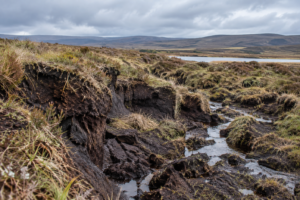
A newly constructed slope often appears complete long before it has become stable.
The earthworks may have been finished, drainage installed and hydroseeding carried out, yet beneath the surface the ground remains vulnerable. During the weeks immediately following construction, before vegetation has established a healthy root system, even relatively modest rainfall can initiate erosion that is both costly to rectify and disruptive to surrounding infrastructure.
It is during this often-overlooked establishment period that many erosion-related issues first emerge.
For engineers, contractors and asset owners, understanding this critical window is fundamental to achieving long-term slope performance.
The Vulnerability of Newly Constructed Slopes
Whether associated with highways, railways, utility corridors, flood alleviation schemes or commercial developments, newly formed embankments and cuttings undergo a period of transition before they become naturally resilient.
Freshly placed soils have not yet consolidated fully, vegetation has yet to develop an effective root network, and surface materials remain exposed to rainfall and runoff.
Without suitable temporary protection, erosion can begin surprisingly quickly.
Surface water flowing across exposed ground detaches fine soil particles before carrying them downslope. Initially, this may appear insignificant. However, repeated rainfall events gradually remove valuable topsoil, create shallow rills and gullies, expose seeded areas and undermine the conditions required for successful vegetation establishment.
What begins as minor surface erosion can rapidly develop into a much more complex maintenance issue.
Rainfall Does Not Need to Be Extreme
It is often assumed that significant erosion only occurs during severe weather events.
In practice, repeated periods of moderate rainfall frequently cause the greatest cumulative damage.
Freshly seeded slopes are particularly susceptible because vegetation has not yet reached the stage where it can reinforce the soil structure naturally. Every rainfall event has the potential to wash away seed, mulch and fine particles before germination can take place.
The result is often uneven vegetation cover, exposed bare patches and additional remedial works that could have been avoided through appropriate temporary protection.
The Hidden Cost of Losing Topsoil
Topsoil is far more than simply the upper layer of soil.
It contains organic matter, nutrients and the growing medium essential for successful vegetation establishment. Once this valuable material is washed downslope or into adjacent drainage systems, replacing it becomes both expensive and time-consuming.
Loss of topsoil can also delay project completion, increase maintenance requirements and affect the long-term appearance and performance of landscaped infrastructure.
Protecting the surface during the establishment phase helps preserve the very conditions that vegetation requires to succeed.
When Hydroseeding Does Not Deliver the Expected Results
Hydroseeding has become a widely adopted technique for establishing vegetation across large slopes and embankments.
When combined with suitable site preparation and favourable weather conditions, it provides an efficient means of achieving rapid ground cover.
However, hydroseeding alone cannot prevent erosion.
Before seeds germinate and roots begin binding the soil together, the treated surface remains exposed to rainfall, wind and runoff. If erosion occurs during this period, seed can be displaced, mulch washed away and germination significantly reduced.
The consequence is often patchy vegetation, inconsistent establishment and additional reinstatement work.
For this reason, hydroseeding is frequently combined with temporary erosion control systems that provide immediate protection whilst vegetation develops.
Protecting Drainage Infrastructure
Surface erosion affects more than the slope itself.
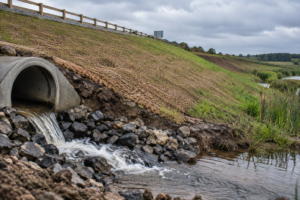
Sediment washed from embankments frequently finds its way into drainage channels, attenuation ponds, culverts and watercourses. Over time, this sediment accumulation can reduce hydraulic capacity, increase maintenance requirements and affect water quality.
On transport and utility projects, sediment entering drainage infrastructure may also create operational issues that extend well beyond the original construction area.
Preventing soil movement at its source is generally far more effective than dealing with the consequences downstream.
Temporary Protection for Long-Term Performance
Effective erosion control is not always about installing permanent engineered systems.
In many situations, the objective is simply to provide sufficient protection during the relatively short period required for vegetation to establish naturally.
Once healthy root systems have developed, the vegetation itself becomes the primary mechanism for stabilising the soil surface.
Temporary biodegradable erosion control systems have been developed specifically for this purpose.
Rather than remaining permanently within the ground, they perform their engineering function during the establishment phase before gradually biodegrading as natural reinforcement takes over.
This approach supports both engineering performance and environmental objectives.
Where Natural Fibre Systems Make a Difference
Natural fibre erosion control products are now widely used across infrastructure and environmental projects where temporary surface protection is required.
Coir Netting
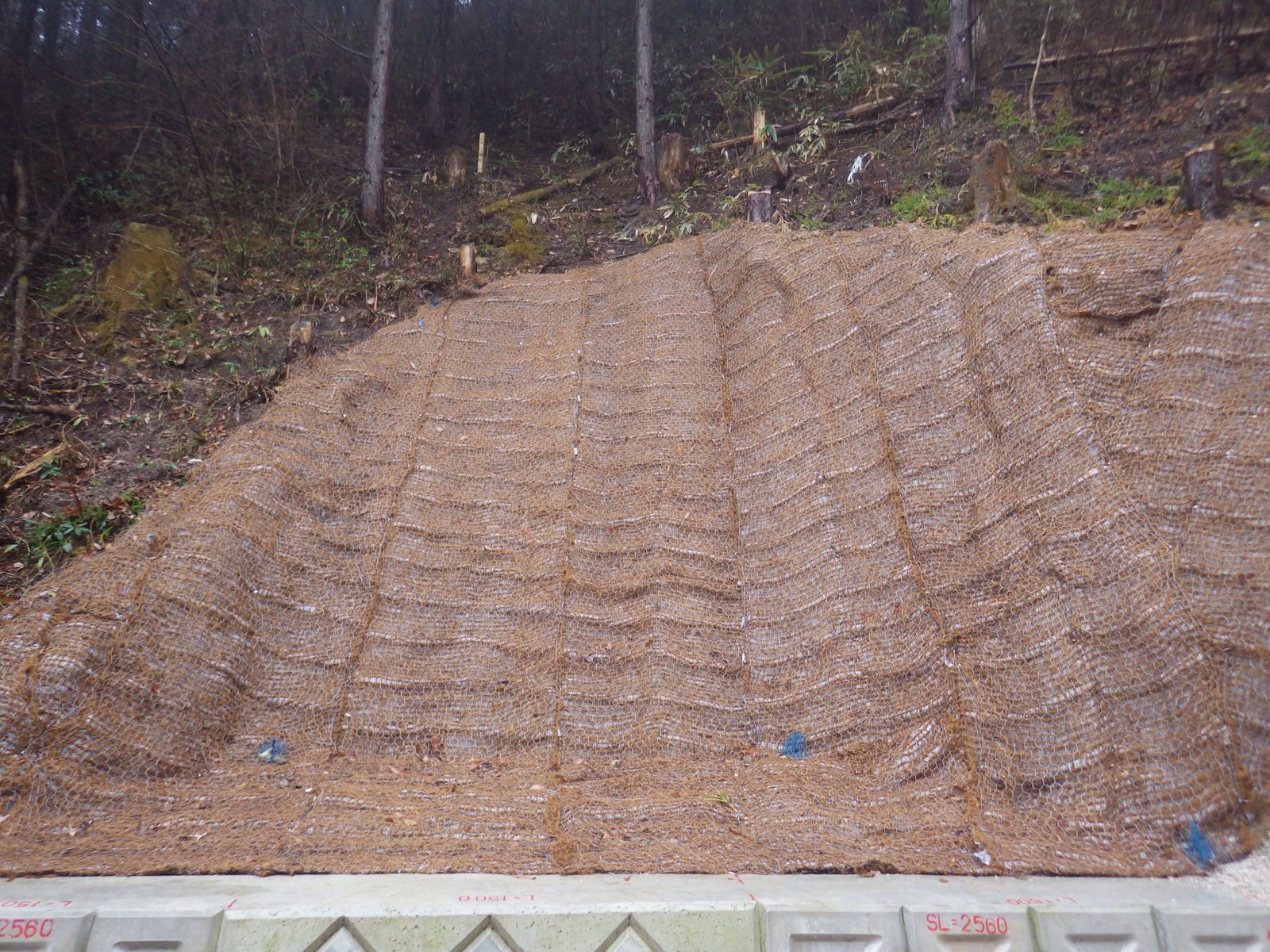
Machine-woven coir netting provides immediate surface reinforcement on exposed slopes, embankments and cuttings. The open weave allows vegetation to grow through the material whilst reducing soil movement caused by rainfall and surface runoff.
As root systems develop, they interlock with the netting to create a stable vegetated surface before the coir naturally biodegrades over time.
Coir Erosion Control Blankets
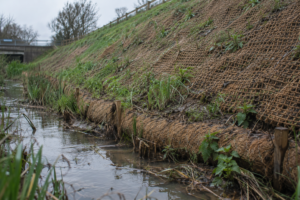
Where additional surface coverage is required, coir erosion control blankets provide enhanced protection by helping to retain soil particles, conserve moisture and improve conditions for seed germination.
These systems are particularly suited to areas experiencing higher erosion risk or where rapid vegetation establishment is critical.
Jute Systems
Jute erosion control products offer an effective biodegradable solution where shorter design lives are appropriate.
Their lighter construction makes them well suited to lower-risk applications, landscaping works and projects where vegetation is expected to establish quickly.
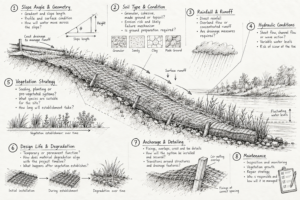
Selecting the most appropriate system depends upon factors including slope angle, soil type, rainfall exposure, vegetation strategy and project objectives.
Supporting Modern Infrastructure Delivery
Across highways, rail, water, utilities and commercial development, expectations surrounding environmental performance continue to evolve.
Protecting slopes is no longer viewed solely as an engineering exercise. It also contributes towards reducing sediment pollution, improving landscape quality, supporting biodiversity and delivering more resilient infrastructure.
Temporary biodegradable erosion control systems complement these objectives by working with natural processes rather than replacing them.
Looking Beyond Construction
The success of an infrastructure project is rarely measured on the day construction finishes.
It is measured months and years later through the performance of the completed asset.
The period immediately following construction represents one of the most important stages in achieving that long-term success. By protecting vulnerable slopes whilst vegetation establishes, engineers and contractors can significantly reduce maintenance requirements, improve environmental outcomes and support the lasting performance of the infrastructure they have delivered.
The first few months may be temporary.
Their impact on the life of the asset is anything but.
Frequently Asked Questions
Why do newly constructed slopes erode so quickly?
Freshly formed slopes have little or no established vegetation, leaving the soil exposed to rainfall, runoff and wind. Until plant roots develop, the surface remains particularly vulnerable to erosion.
Is hydroseeding alone enough to prevent erosion?
Hydroseeding encourages vegetation growth, but it does not provide immediate erosion protection. Combining hydroseeding with temporary erosion control systems can help protect the soil while vegetation becomes established.
What is the purpose of coir netting?
Coir netting provides temporary surface stabilisation, helping to reduce soil loss, retain seed and support vegetation establishment. Once plants have matured, the coir gradually biodegrades naturally.
Where are erosion control blankets typically used?
Erosion control blankets are commonly used on highway embankments, railway cuttings, drainage channels, watercourse banks, utility corridors, commercial developments and environmental restoration projects where additional surface protection is required.
Are biodegradable erosion control systems suitable for infrastructure projects?
Yes. Biodegradable systems such as coir netting, coir erosion control blankets and jute products are widely used where temporary protection is required while vegetation establishes, provided they are appropriate for the project’s engineering requirements and design objectives.
About SALIKE®
SALIKE® is a British engineering-led supplier specialising in natural fibre geotechnical and erosion control systems. Since 2015, we have supported infrastructure, environmental restoration and landscape projects across more than 17 countries, supplying biodegradable solutions that combine engineering performance with environmental responsibility.