
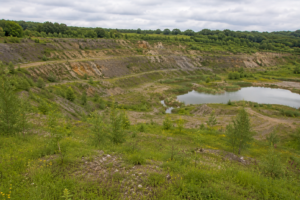
Engineering Challenges in Quarry Restoration Projects
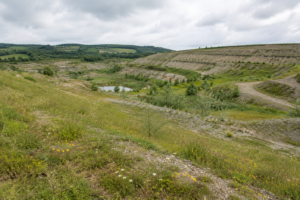
Quarry restoration is often viewed as the final stage of mineral extraction. In reality, it is a complex engineering process that can continue for many

Precision-engineered biodegradable natural fibres for consistent, reliable performance.
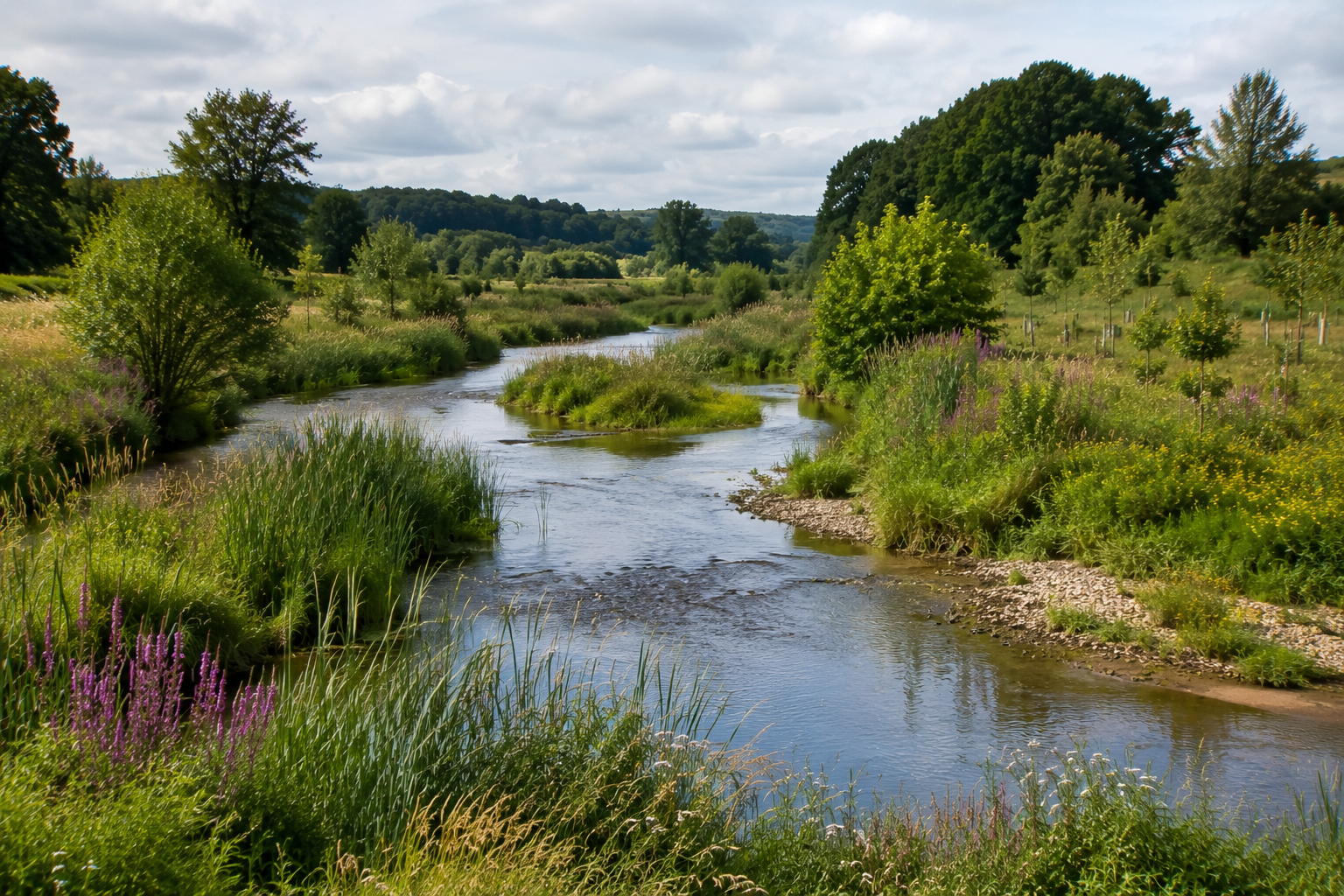
Across the UK, river restoration is becoming an increasingly important component of environmental management, flood resilience and habitat recovery.
Decades of channel modification, hard engineering, land use change and urban development have altered many river systems, often reducing ecological function and disconnecting natural processes that once helped maintain healthy watercourses. In response, river restoration projects are increasingly seeking to restore natural characteristics whilst improving environmental performance and long term resilience.
This shift is changing how river engineering is approached.
Where previous interventions often focused on controlling watercourses through rigid structures and hard armouring, modern restoration schemes are increasingly integrating natural materials that work alongside the river rather than against it.
The objective is no longer simply stability.
It is the creation of resilient river systems capable of supporting both ecological and engineering outcomes.
River restoration is not a single activity.
Projects can range from small scale bank stabilisation schemes through to extensive catchment-wide programmes involving habitat enhancement, channel reconfiguration and floodplain reconnection.
Despite their differences, many restoration projects share common objectives.
Improving ecological function, enhancing habitat diversity, reducing erosion, supporting biodiversity and creating more resilient watercourses are frequently central to project design.
Achieving these goals requires an understanding that rivers are dynamic systems.
Unlike conventional infrastructure, river environments continually adapt and evolve. Water levels fluctuate, sediment moves, vegetation develops and channel characteristics change over time.
Successful restoration therefore relies upon solutions capable of accommodating these natural processes.
One of the most common challenges within river restoration projects is bank erosion.
Uncontrolled erosion can contribute to sedimentation, habitat degradation and the loss of valuable riparian land. However, stabilising riverbanks does not necessarily require extensive use of concrete, stone revetments or other heavily engineered structures.
In many locations, softer approaches can provide effective protection whilst supporting wider environmental objectives.
The key consideration is understanding the nature of the erosion problem and selecting a solution that aligns with the long-term goals of the project.
Where ecological enhancement forms part of the desired outcome, stabilisation measures that encourage vegetation establishment and habitat development often provide significant advantages.
The objective is not simply to resist erosion, but to enable the riverbank to become increasingly self-sustaining over time.
Many historic river engineering projects focused on straightening, deepening or confining channels to improve drainage or manage land use requirements.
Whilst these interventions often achieved their immediate objectives, they frequently altered natural river processes and reduced habitat complexity.
Modern restoration schemes increasingly seek to reverse some of these impacts.
Channel restoration may involve reintroducing natural meanders, reconnecting floodplains, creating marginal habitats and restoring more diverse hydraulic conditions. These measures can help improve ecological function whilst supporting broader catchment management objectives.
Natural materials are often well suited to this type of work because they can integrate within the river environment and support evolving channel conditions.
Rather than imposing rigid constraints on the system, they assist the recovery process whilst allowing natural adaptation to occur.
Habitat creation has become a central component of many river restoration projects.
Healthy watercourses support a wide range of plant and animal species, many of which depend upon diverse bank conditions, marginal vegetation and varied flow characteristics.
Engineering interventions increasingly seek to deliver multiple outcomes simultaneously.
A riverbank stabilisation project may also create habitat opportunities. A channel restoration scheme may support biodiversity enhancement whilst improving resilience to erosion. Flood management measures may contribute to ecological recovery alongside hydraulic performance.
This integrated approach reflects a growing recognition that environmental and engineering objectives do not need to operate independently.
Well-designed restoration projects can deliver both.
One of the defining characteristics of successful river restoration is the ability to support natural succession.
Following installation, vegetation begins to establish, root systems develop and ecological communities gradually become more complex. Over time, these natural processes contribute increasingly to the stability and resilience of the restored environment.
Engineering interventions play an important role during this transition.
The objective is often to provide support during the period when riverbanks and marginal habitats remain vulnerable. Once vegetation becomes established and ecological processes strengthen, the dependence on engineered measures can reduce significantly.
This creates a progression from engineered stability towards natural resilience.
For many restoration projects, this is a key measure of success.
Natural fibre systems have become widely used within river restoration because they align closely with the requirements of recovering watercourse environments.
Products such as coir logs, pre-grown coir logs and coir pallets provide temporary support whilst encouraging vegetation establishment and habitat development. They can assist with bank protection, sediment retention and ecological integration during critical phases of restoration.
Importantly, these systems are capable of supporting both engineering and environmental objectives simultaneously.
By helping to stabilise vulnerable areas whilst creating opportunities for vegetation growth, they contribute to the gradual development of self-sustaining riverbank conditions.
This relationship between engineering performance and ecological recovery lies at the heart of many modern restoration strategies.
The future of river restoration is likely to involve an increasingly integrated approach to watercourse management.
Climate resilience, biodiversity enhancement, catchment recovery and environmental stewardship are becoming central considerations alongside traditional engineering requirements. As a result, project teams are seeking solutions that contribute to multiple outcomes rather than addressing a single issue in isolation.
Natural materials are well positioned within this evolving landscape.
Their ability to support riverbank stabilisation, channel restoration and habitat creation makes them valuable tools within projects seeking to balance environmental recovery with long term performance.
Ultimately, successful river restoration is not simply about managing water.
It is about creating conditions in which rivers can function more naturally, support greater ecological value and remain resilient for future generations.
Engineering has an important role within that process.
Increasingly, its purpose is not to control natural systems, but to help them recover.
Quarry restoration is often viewed as the final stage of mineral extraction. In reality, it is a complex engineering process that can continue for many
Land restoration projects often begin with ambitious environmental objectives. Whether the goal is habitat creation, quarry restoration, brownfield regeneration, riverbank recovery or biodiversity enhancement, the
Across the UK, brownfield land is increasingly being viewed as an opportunity rather than a constraint. Former industrial sites, disused infrastructure corridors, redundant commercial land
Across the UK, thousands of hectares of land are undergoing some form of recovery, restoration or regeneration. Former quarries are being transformed into ecological habitats,