For much of the past two decades, carbon discussions within infrastructure delivery focused predominantly on operational performance. Energy consumption, operational efficiency and emissions during asset use understandably dominated sustainability conversations across the built environment.
That position is now changing rapidly.
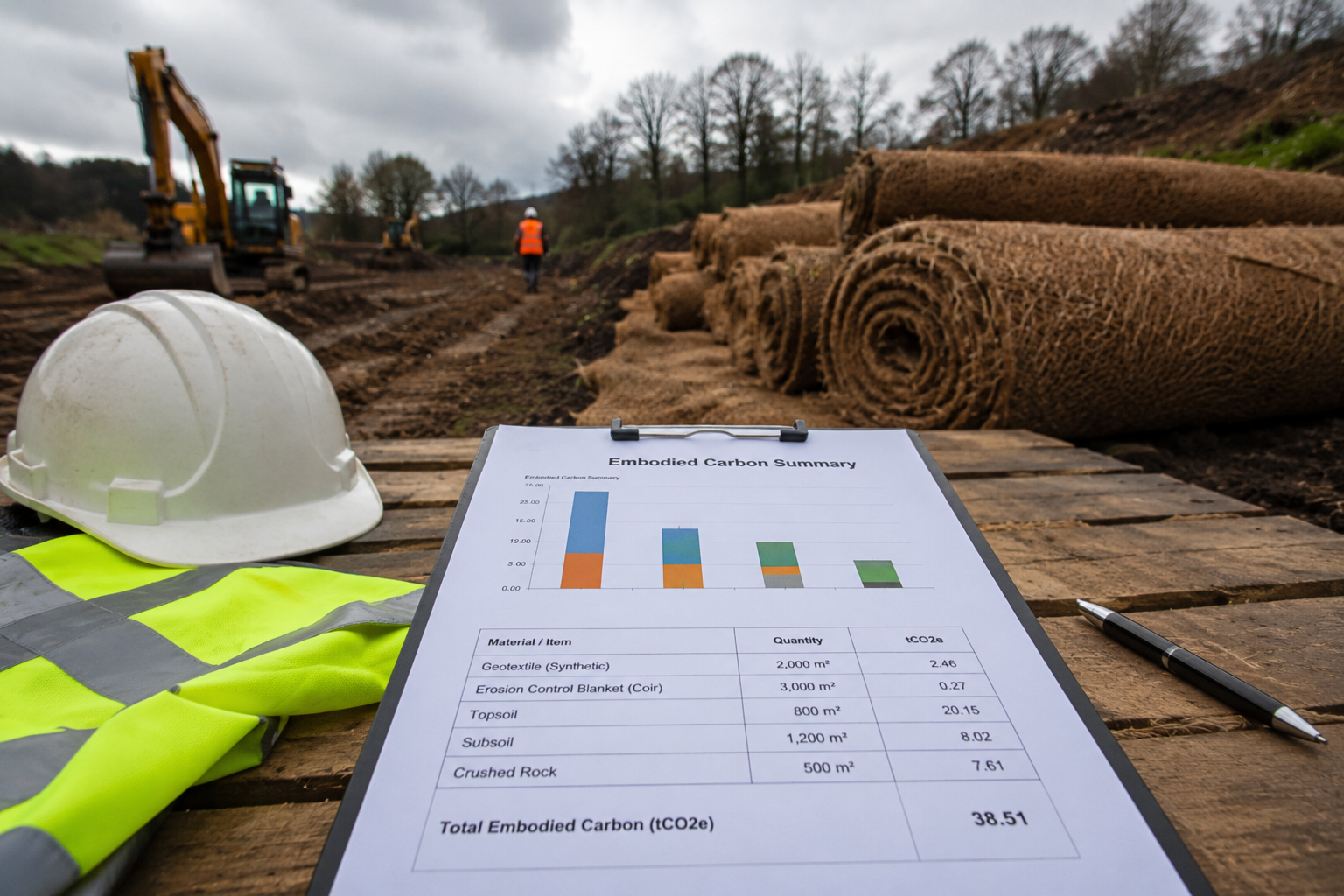
Across civil engineering and major infrastructure projects, embodied carbon has become one of the most important emerging considerations influencing procurement, specification and long term project strategy. Increasingly, clients are no longer asking solely whether infrastructure performs effectively they are asking how much carbon was required to build it in the first place.
Within earthworks and geotechnical engineering, this shift carries significant implications.
Earthworks operations are inherently material intensive. From slope stabilisation systems and erosion control products to drainage layers, reinforcement materials and ground improvement solutions, every specification decision contributes to the overall carbon profile of a project. Historically, these impacts were rarely evaluated in meaningful detail during early stage design. Today, that position is becoming increasingly difficult to justify.
Frameworks such as PAS 2080, combined with Net Zero commitments across public infrastructure bodies and major contractors, are accelerating the move towards whole life carbon accountability. Embodied carbon reporting is gradually evolving from a specialist sustainability exercise into a core component of mainstream infrastructure delivery.
For geotechnical engineers and consultants, this means material selection is entering a new phase of scrutiny.
Conventional synthetic geotextiles, polymer based erosion control systems and carbon intensive construction materials are increasingly being assessed not only on technical performance, but also on manufacturing emissions, transportation impacts, disposal implications and long-term environmental legacy.
At the same time, procurement criteria are evolving.
Public sector frameworks, local authorities and infrastructure clients are placing growing emphasis on measurable carbon reduction strategies, sustainable sourcing and environmental transparency within tender submissions. Contractors capable of demonstrating lower embodied carbon solutions are increasingly positioned more favourably during evaluation processes particularly where ESG performance and environmental stewardship form part of project scoring methodologies.
This represents a fundamental shift in infrastructure thinking.
Historically, many specifications prioritised maximum material durability with limited consideration for proportionality or lifecycle alignment. However, in temporary erosion control and landscape stabilisation applications especially, questions are now being raised around whether materials designed to persist indefinitely are always appropriate for short to medium term engineering functions.
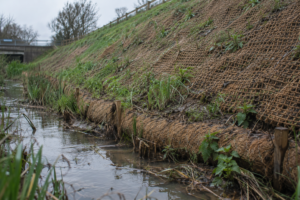
Natural fibre erosion control systems are becoming increasingly relevant within this conversation. Coir based solutions, for example, offer a lower carbon alternative to many synthetic systems while simultaneously supporting vegetation establishment, ecological integration and temporary surface stabilisation during vulnerable recovery phases.
Importantly, embodied carbon reporting is unlikely to remain confined to major flagship infrastructure projects alone.
As sustainability disclosure obligations expand and supply chain transparency expectations increase, carbon accountability is expected to filter progressively throughout the wider construction and engineering sectors. Over time, embodied carbon data may become as routine within earthworks specifications as tensile strength, permeability or hydraulic performance.
The implication for the industry is clear.
The future of geotechnical engineering will not be shaped solely by structural performance in isolation. Increasingly, it will be defined by how intelligently engineering decisions balance technical functionality, environmental responsibility and long term infrastructure resilience.
Embodied carbon is therefore no longer a peripheral sustainability issue. It is rapidly becoming a central engineering consideration and one that is likely to influence every future earthworks specification.