Geotechnical engineering is entering a period of significant transformation.
For decades, the discipline focused predominantly on structural stability, load management and ground performance. These principles remain fundamental to infrastructure delivery and will continue to underpin the safety and resilience of civil engineering projects worldwide.
However, the pressures shaping modern infrastructure are evolving rapidly.
Today’s infrastructure projects are expected to achieve far more than technical compliance alone. Alongside structural performance, projects are increasingly being assessed against carbon reduction targets, biodiversity objectives, environmental resilience and long term sustainability commitments. As a result, geotechnical engineering is gradually expanding beyond its traditional boundaries into a more integrated relationship with ecology, climate strategy and environmental stewardship.
This shift is reshaping how infrastructure is designed, specified and delivered across the UK.
Historically, engineering and ecology often operated as separate disciplines within infrastructure projects. Environmental considerations were frequently introduced later in the design process as mitigation measures once primary engineering decisions had already been established.
That approach is becoming increasingly difficult to sustain.
Climate adaptation pressures, Biodiversity Net Gain requirements, ESG led procurement frameworks and Net Zero commitments are now influencing projects from the earliest stages of planning and design. Infrastructure owners, public authorities and contractors are under growing pressure to demonstrate that projects can achieve technical resilience while simultaneously reducing environmental impact and supporting long term ecological recovery.
For the geotechnical sector, this is creating a fundamental evolution in engineering priorities.
Ground engineering solutions are increasingly being evaluated not only for how effectively they stabilise landscapes, but also for how they influence carbon performance, hydrological behaviour, vegetation establishment and long term environmental integration.
This is particularly evident within erosion control and land stabilisation strategies.
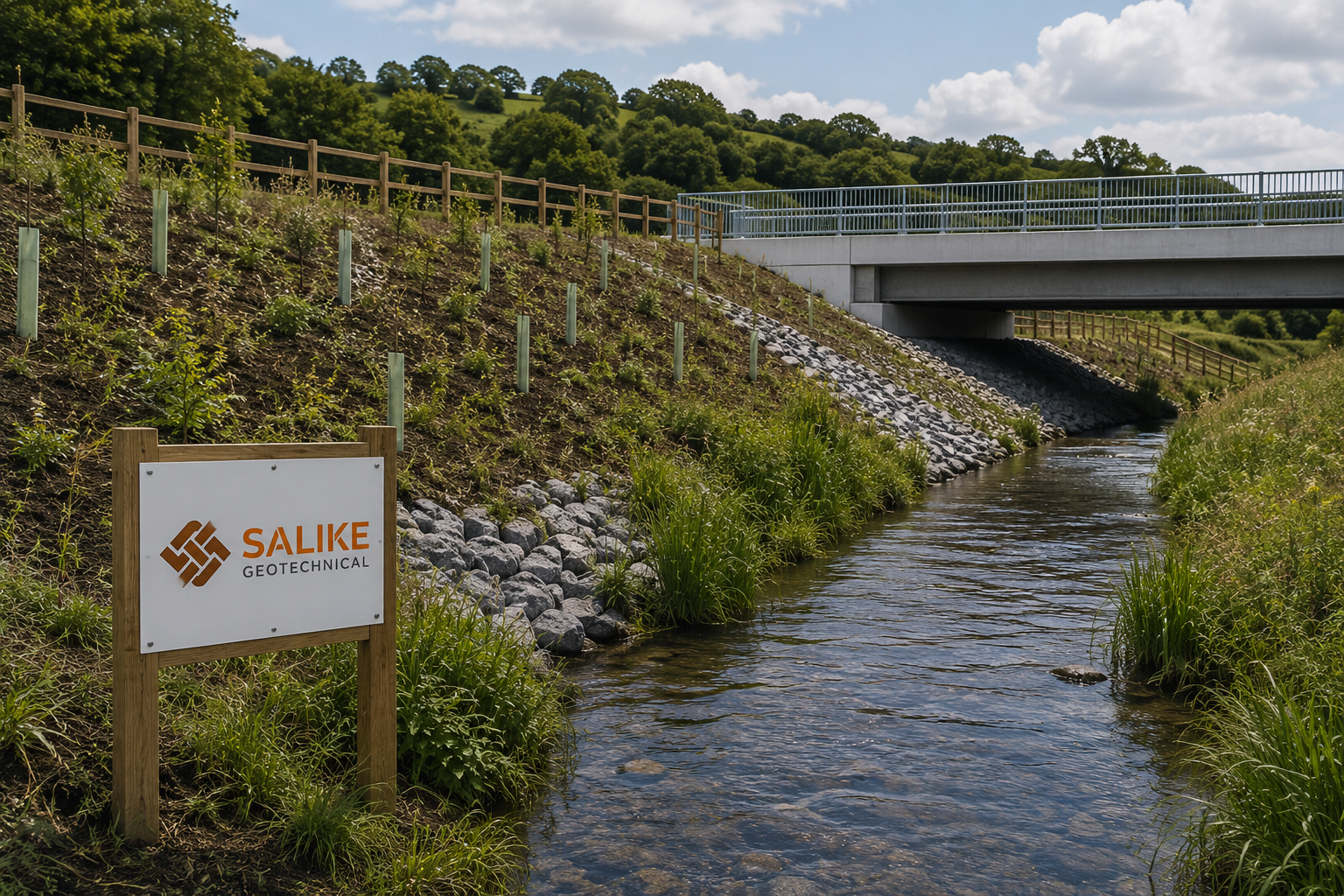
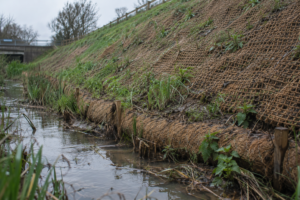
Natural fibre erosion control systems, vegetated slope solutions and bioengineered riverbank approaches are becoming more widely integrated into infrastructure delivery as part of broader resilience and sustainability strategies. Rather than relying exclusively on rigid structural intervention, many projects are now adopting approaches that combine engineering stability with ecological functionality and adaptive landscape performance.
Importantly, this evolution does not represent a weakening of engineering standards.
In many cases, integrating ecological systems into geotechnical design can strengthen long term infrastructure resilience. Established vegetation improves surface stability, assists with moisture regulation and contributes to erosion resistance over time. Restored floodplains can support hydraulic management while simultaneously improving biodiversity. Environmentally integrated infrastructure often performs more adaptively under changing climatic conditions than highly rigid systems alone.
At the same time, carbon accountability is becoming increasingly central to engineering decision making.
Embodied carbon reporting, material lifecycle assessment and sustainable sourcing expectations are beginning to influence procurement processes across major infrastructure sectors. Materials and systems that reduce environmental impact while maintaining engineering performance are likely to become increasingly important within future specification frameworks.
The next generation of geotechnical engineering will therefore require broader interdisciplinary thinking than ever before.
Future engineers will not only need to understand soils, slopes and structural behaviour, but also ecological recovery, climate resilience, carbon performance and long term environmental stewardship. Increasingly, successful infrastructure projects will depend on how effectively these disciplines are integrated rather than separated.
This represents a significant cultural shift for the wider infrastructure industry.
Engineering is no longer solely about resisting environmental forces. Increasingly, it is about understanding how infrastructure can function more intelligently within natural systems while remaining technically robust, operationally resilient and environmentally responsible.
The future of geotechnical engineering is therefore unlikely to be defined by structural performance alone.
It will be defined by how effectively the industry can balance engineering excellence with ecological intelligence, carbon accountability and long term landscape resilience.