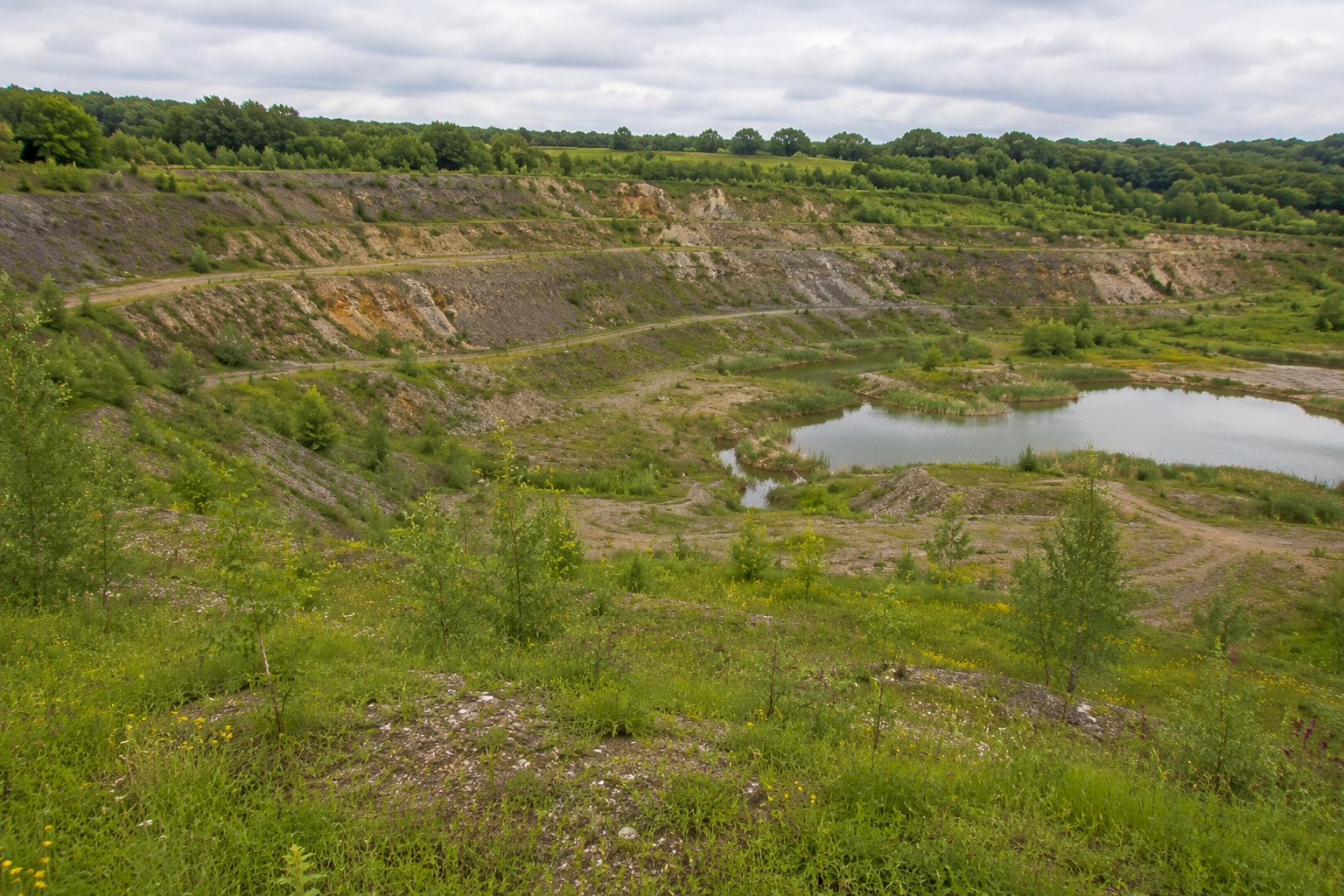
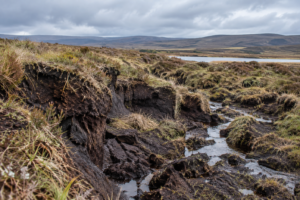
Quarry restoration is often viewed as the final stage of mineral extraction.
In reality, it is a complex engineering process that can continue for many years after extraction activities have ceased. Whilst restoration schemes are frequently associated with habitat creation, landscape enhancement and biodiversity objectives, successful outcomes depend upon a range of geotechnical and environmental factors that must be carefully managed throughout the recovery process.
The transition from active quarry to functioning landscape is rarely straightforward.
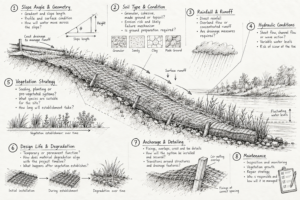
Steep slopes, exposed substrates, surface erosion, drainage management and vegetation establishment all present challenges that can influence the long-term success of restoration works. Before ecological objectives can be achieved, the physical environment must first be capable of supporting recovery.
For this reason, engineering remains central to effective quarry restoration.
The Growing Importance of Quarry Restoration
Across the UK, quarry restoration forms an important component of responsible mineral extraction.
Modern restoration schemes are expected to deliver far more than visual improvement alone. Former extraction sites are increasingly being transformed into nature reserves, recreational landscapes, wetlands, agricultural land and biodiversity enhancement areas.
Planning authorities, local communities and environmental stakeholders often expect restored quarries to provide long-term environmental value.
Achieving these objectives requires careful consideration of both ecological and engineering performance.
The challenge is not simply creating a landscape that looks natural. It is creating a landscape that can function successfully for decades after restoration works are completed.
Managing Steep Slopes in Restored Quarries
One of the most significant engineering challenges within quarry restoration is slope management.
Extraction activities frequently leave steep landforms, exposed faces and complex topography. Whilst regrading can reduce slope angles in many areas, restored landscapes often continue to contain embankments and earthworks that remain vulnerable during the early stages of recovery.
These slopes may be exposed to intense rainfall, surface runoff and seasonal weather variations before vegetation becomes fully established.
Without adequate protection, erosion can develop rapidly.
Small areas of soil loss can evolve into rilling, gullying and localised instability, potentially affecting both restoration performance and long-term maintenance requirements.
Protecting vulnerable slopes during the establishment phase is therefore a critical aspect of successful restoration design.
Surface Erosion and the Risk to Recovery
Surface erosion represents one of the most common causes of restoration underperformance.
Freshly placed soils and growing media are particularly susceptible to erosion during the period immediately following installation. Heavy rainfall can remove valuable topsoil, transport sediment across the site and undermine newly established vegetation.
The consequences extend beyond the loss of soil itself.
Erosion can reduce seed retention, affect plant establishment, alter drainage patterns and increase the likelihood of future remedial works. In severe cases, surface degradation can compromise wider restoration objectives and delay ecological recovery.
Managing erosion is therefore not simply an environmental consideration.
It is an essential engineering requirement.
Revegetation: More Than Simply Planting Seed
Vegetation plays a fundamental role in successful quarry restoration.
As plant communities establish, root systems begin to reinforce soils, improve infiltration and contribute to long-term slope stability. Vegetation also provides the foundation for habitat development and wider ecological succession.
However, vegetation establishment is often one of the most challenging phases of restoration.
Newly seeded areas remain vulnerable to drought, erosion, seed displacement and poor germination conditions. Until root systems become established, the landscape has limited natural resistance to environmental pressures.
This creates a critical period during which engineered support measures may be required to protect the site and improve the likelihood of successful establishment.
The objective is not to replace natural recovery, but to create the conditions that allow it to occur.
Water Management Within Restored Landscapes
Water is both an asset and a risk within quarry restoration projects.
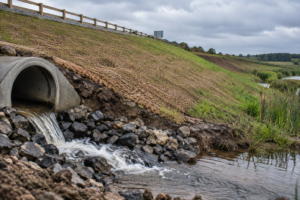
Effective drainage is necessary to support vegetation growth and maintain stable site conditions. At the same time, uncontrolled surface water can become a significant driver of erosion and instability.
The topography of former quarries often creates complex drainage patterns. Runoff may become concentrated along slopes, benches and transitional landforms, increasing the potential for soil loss during storm events.
As climate patterns continue to evolve and rainfall intensity increases, water management is becoming an increasingly important component of restoration planning.
Successful schemes recognise that vegetation establishment, erosion control and drainage performance are closely interconnected.
Each influences the long-term resilience of the restored landscape.
The Role of Temporary Engineering Solutions
A common misconception within restoration projects is that permanent outcomes require permanent interventions.
In practice, many successful restoration schemes rely upon temporary engineering measures during the period when the landscape is most vulnerable.
The establishment phase typically lasts between one and three growing seasons, depending upon site conditions and vegetation objectives. During this period, erosion risks are often at their highest, whilst natural stabilisation mechanisms remain relatively limited.
Temporary erosion control systems help bridge this gap.
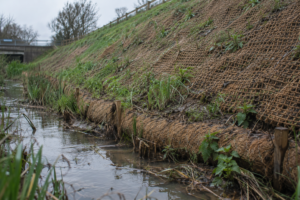
By protecting soils, supporting vegetation establishment and reducing the effects of surface runoff, these measures assist the landscape until ecological processes become capable of providing long-term stability.
Natural Fibre Systems in Quarry Restoration
Natural fibre erosion control systems are increasingly specified within quarry restoration projects because their performance characteristics align closely with the restoration process itself.
Products such as coir netting, erosion control blankets and coir logs provide temporary protection during critical phases of recovery. These systems help reduce soil loss, support moisture retention and improve conditions for vegetation establishment whilst integrating naturally within the landscape.
Unlike permanent hard-engineered interventions, natural fibre solutions are designed to support ecological recovery rather than compete with it.
As vegetation matures and root systems develop, the importance of the temporary system gradually diminishes. Stability increasingly becomes provided by the recovering landscape itself.
This creates a practical relationship between engineering performance and environmental restoration.
Engineering the Conditions for Recovery
Successful quarry restoration is not defined solely by what happens at the end of the process.
It is determined by how effectively the landscape is supported during the years immediately following restoration works.
Steep slopes, erosion risks, vegetation establishment and water management all require careful consideration if long-term objectives are to be achieved. Ecological recovery does not occur independently of engineering; rather, it depends upon engineering creating the conditions in which natural processes can succeed.
As expectations surrounding environmental performance continue to increase, quarry restoration is becoming less about simply closing a site and more about creating resilient, functioning landscapes.
The most successful projects recognise that recovery begins with stable ground, effective erosion management and a clear understanding of how engineering and ecology work together.
Ultimately, restoration is not the end of the quarry lifecycle.
It is the beginning of a new one.