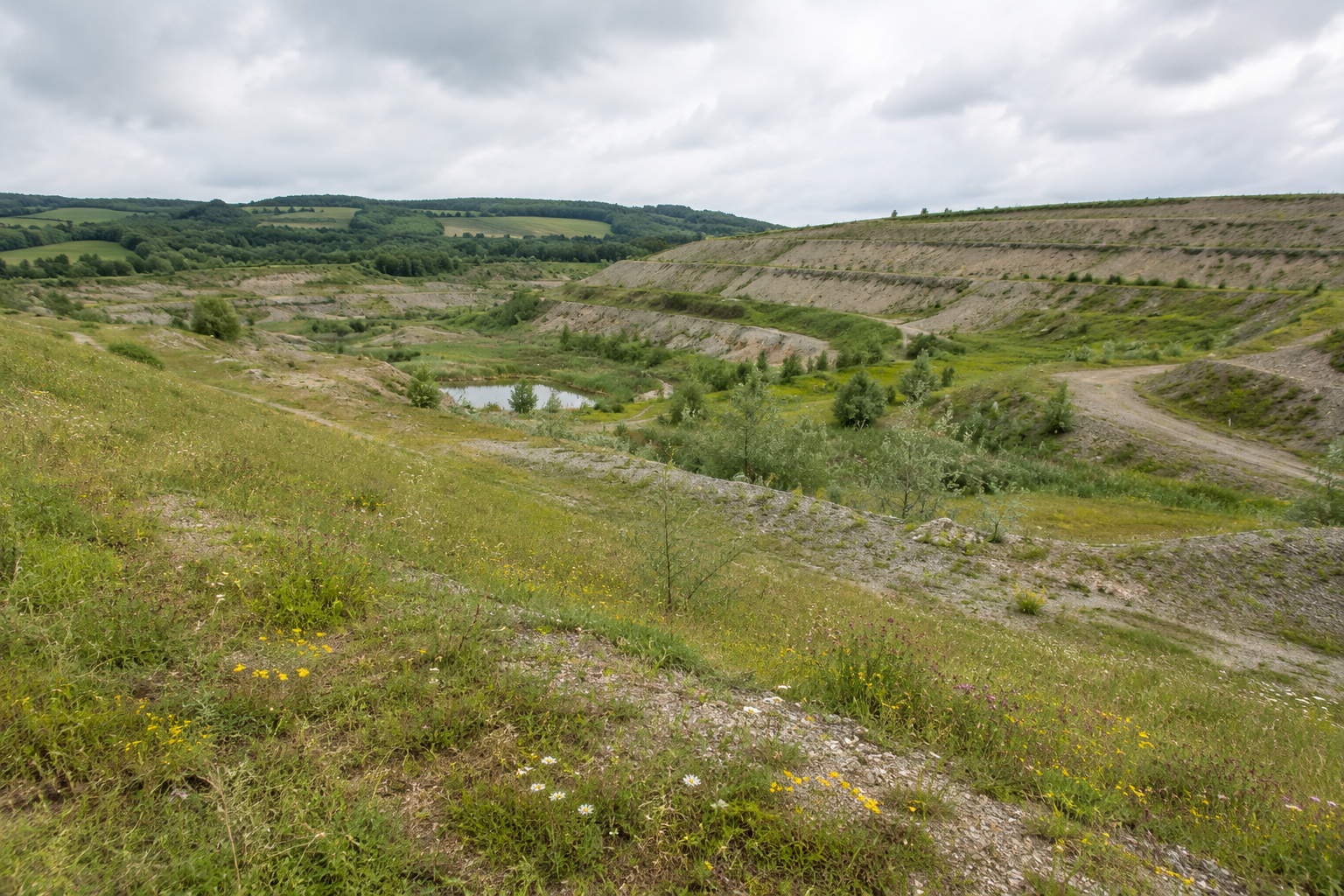
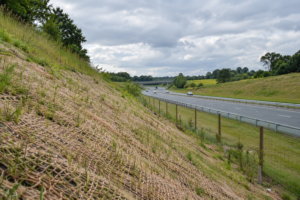
Across the UK, thousands of hectares of land are undergoing some form of recovery, restoration or regeneration. Former quarries are being transformed into ecological habitats, brownfield sites are being prepared for redevelopment, landfill sites are entering long-term restoration programmes, and previously industrial landscapes are being reintroduced into the natural environment.
Whilst these projects are often discussed through the lens of ecology, biodiversity or environmental improvement, successful land recovery begins with engineering.
Before habitats can establish, before vegetation can thrive and before ecological objectives can be achieved, the ground itself must first become stable.
For engineers, landscape recovery is not simply a process of planting vegetation. It is a carefully managed transition between a disturbed, vulnerable landform and a self-sustaining environment capable of supporting long-term ecological function.
The challenge lies in managing that transition effectively.
Understanding Land Recovery
Land recovery refers to the process of returning disturbed, degraded or previously developed land to a condition that can support beneficial future use.
The intended outcome may vary considerably between projects.
Some sites are restored to support biodiversity and habitat creation. Others are returned to agricultural use, public open space or recreational landscapes. In certain cases, land recovery forms part of wider infrastructure development, enabling former industrial land to be safely incorporated into future construction projects.
Despite these differing objectives, the underlying challenge remains remarkably consistent.
Disturbed land is often physically unstable.
Exposed soils may be susceptible to erosion. Slopes can remain vulnerable to surface runoff. Vegetation establishment may be limited by poor growing conditions. In many instances, the processes required to achieve ecological recovery are themselves threatened by ongoing ground degradation.
This is where engineering plays a critical role.
Why Ground Stability Comes Before Habitat Creation
Environmental ambitions are often highly visible within restoration projects. Biodiversity targets, planting schemes and habitat creation strategies typically feature prominently throughout planning and stakeholder engagement.
However, ecological success depends upon something more fundamental.
Stable ground conditions.
Vegetation cannot establish effectively where soils are continually eroding. Seed mixes cannot perform as intended if rainfall removes growing media before germination occurs. Habitat creation objectives become significantly more difficult to achieve when slopes remain vulnerable to washout and surface instability.
The first phase of successful land recovery is therefore rarely ecological.
It is geotechnical.
Engineers must first create the conditions that allow natural processes to succeed. This may involve managing surface water, reducing erosion, protecting exposed soils and providing temporary reinforcement during critical establishment periods.
Once these foundations are in place, ecological recovery becomes significantly more achievable.
Former Quarries: Managing Recovery in Challenging Terrain
Quarry restoration presents some of the most demanding land recovery challenges.
The extraction process frequently leaves steep slopes, exposed substrates and highly variable landforms. These conditions can create significant erosion risks, particularly during the early stages of restoration when vegetation cover remains limited.
Rainfall can rapidly mobilise exposed soils, leading to gullying, sediment transport and deterioration of newly formed landforms.
In such environments, erosion control systems are often deployed as temporary engineering measures designed to protect the landscape whilst vegetation establishes.
Natural fibre solutions can provide immediate surface protection whilst allowing ecological processes to develop over time.
By stabilising the surface and reducing soil loss, these systems help preserve the integrity of restoration works and support the gradual transition towards a naturally functioning landscape.
Brownfield Regeneration and Environmental Recovery
Brownfield sites present a different, but equally important, set of challenges.
Across the UK, significant areas of previously developed land are being repurposed to support housing, commercial development, public infrastructure and environmental enhancement initiatives.
Many of these sites contain disturbed soils that have remained exposed for extended periods.
Where new landscape features are introduced, erosion can become a significant obstacle to successful establishment.
Surface instability may affect drainage performance, planting success and long-term maintenance requirements.
For project teams, effective ground management during the early stages of recovery can significantly influence the long-term success of the site.
Protecting soils during the establishment phase allows landscape and ecological objectives to develop as intended whilst reducing the need for future remedial intervention.
Landfill Restoration and Long-Term Landscape Performance
Landfill restoration programmes often operate over extended timescales.
Following closure, engineered capping systems are typically designed to support future vegetation establishment whilst protecting the integrity of the underlying containment infrastructure.
Surface erosion can present a particular concern.
The loss of protective soil layers may affect vegetation performance and, in some cases, increase maintenance requirements across restored areas.
Managing these risks requires a balanced approach.
The objective is not necessarily to create permanent engineered structures, but rather to provide sufficient protection during the period when vegetation and root systems are developing.
Once ecological stability is achieved, the landscape increasingly becomes capable of managing itself.
This principle lies at the heart of many successful restoration projects.
The Role of Erosion Control in Land Recovery
Erosion control is frequently viewed as a construction-phase activity.
In reality, it often serves as the bridge between engineering intervention and ecological recovery.
Effective erosion control systems perform several important functions simultaneously.
They reduce the erosive impact of rainfall, help maintain soil structure, support moisture retention and create conditions that encourage vegetation establishment.
Importantly, they also provide protection during the period when restored landscapes are most vulnerable.
This temporary but highly influential role can determine whether recovery objectives are achieved efficiently or require repeated intervention.
The most successful systems are those that support natural processes rather than attempting to replace them.
Natural Fibre Systems Within Landscape Restoration
Natural fibre erosion control materials are increasingly being specified within restoration projects because their functional lifespan aligns closely with the recovery process itself.
Products such as coir netting, erosion control blankets and coir sheets can provide temporary surface stabilisation whilst allowing vegetation to establish through and around the material.
Rather than remaining as permanent elements within the landscape, these systems gradually degrade as root structures develop and ecological stability increases.
This creates a transition in which engineered performance progressively gives way to natural resilience.
For many land recovery projects, this approach represents an effective balance between short-term protection and long-term environmental integration.
Looking Beyond Restoration
The most successful land recovery projects do more than repair damaged landscapes.
They create the conditions for future resilience.
Whether restoring former quarries, regenerating brownfield sites, rehabilitating landfill areas or transforming industrial land, the objective is not simply to stabilise the ground. It is to enable the landscape to function independently once again.
Achieving that outcome requires more than ecological ambition alone.
It requires engineering solutions that recognise how landscapes recover, how vegetation establishes and how temporary interventions can support permanent environmental improvement.
As expectations surrounding biodiversity, sustainability and environmental stewardship continue to evolve, the role of engineering within land recovery is likely to become increasingly important.
The future of restoration will not be defined solely by what is planted.
It will be shaped by how effectively the ground beneath it is prepared to recover.