Distinguishing surface protection from structural stability in modern earthworks engineering
A common misconception in practice
Within geotechnical design, the terms erosion control and slope stabilisation are often used interchangeably. In practice, however, they address fundamentally different challenges and confusing the two can lead to inappropriate material selection, underperformance and, in some cases, system failure.
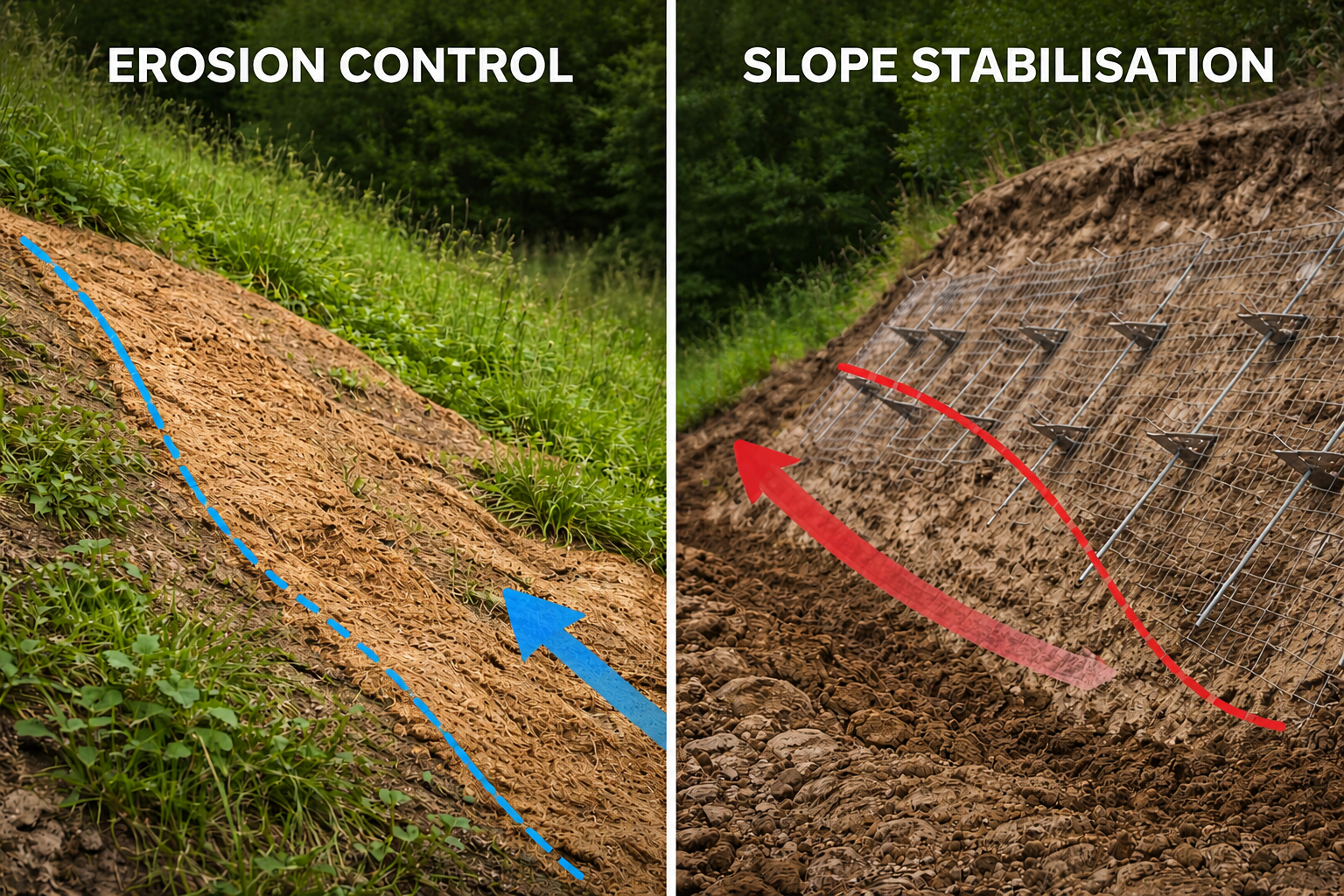
Erosion control relates to the protection of the soil surface, preventing the detachment and transport of particles caused by rainfall, surface runoff and wind. Slope stabilisation, by contrast, concerns the structural integrity of the slope mass, addressing deeper geotechnical mechanisms such as shear failure, slip planes and rotational movement.
Understanding this distinction is critical. Erosion is a surface process. Instability is a structural condition.
Surface Erosion: a shallow but critical process
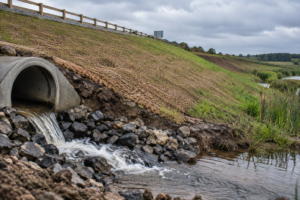
Surface erosion occurs when soil particles are dislodged and transported by external forces, typically:
- rainfall impact
- overland flow
- channelised water movement
While often perceived as a superficial issue, uncontrolled erosion can lead to:
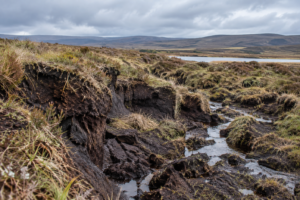
- progressive loss of topsoil
- exposure of subgrade materials
- formation of rills and gullies
- long-term degradation of slope performance
Erosion control systems are designed to mitigate these effects by:
- reducing flow velocity at the surface
- protecting soil from direct rainfall impact
- promoting vegetation establishment
These systems operate within the uppermost layer of the soil profile.
Slope Stabilisation: a structural challenge
Slope stabilisation addresses deeper-seated geotechnical risks, including:
- rotational or translational slip
- shallow or deep seated failure planes
- loss of shear strength within the soil mass
Such conditions are influenced by:
- soil type and stratigraphy
- pore water pressure
- slope geometry
- loading conditions
Stabilisation solutions typically involve:
- retaining structures
- soil reinforcement systems
- drainage interventions
- ground improvement techniques
These are engineering responses to structural instability, not surface protection.
Where natural fibre systems fit
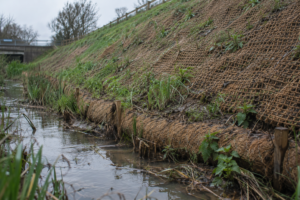
Natural fibre erosion control systems, including coir netting, coir erosion control blankets and coir logs are specifically designed to address surface erosion processes.
Their role is to:
- protect exposed soil during vulnerable early stages
- reduce surface water velocity
- trap sediment and organic matter
- create a favourable environment for vegetation establishment
When correctly applied, these systems perform a critical enabling function, allowing vegetation to develop and provide long term, natural stabilisation through root reinforcement.
However, it is essential to be clear:
Natural fibre erosion control systems are not designed to stabilise structurally unstable slopes.
They do not:
- increase shear strength of the soil mass
- prevent deep seated failure
- act as load bearing reinforcement
The Risk of Misapplication
Misunderstanding the distinction between erosion control and slope stabilisation can result in:
- specifying surface systems where structural intervention is required
- overestimating the capability of biodegradable materials
- project underperformance or failure under load conditions
Conversely, over engineering can also occur where permanent, high impact solutions are used to address what is fundamentally a surface erosion issue.
Both scenarios represent a misalignment between problem and solution.
A more precise engineering approach
Effective geotechnical design requires a layered understanding:
- Is the slope structurally stable?
If not, stabilisation measures must be implemented first.
- Is the surface vulnerable to erosion?
If so, erosion control systems including natural fibre solutions should be applied.
In many projects, both conditions may coexist. In such cases, erosion control and stabilisation systems should be complementary, not interchangeable.
Conclusion: clarity drives performance
As the industry moves towards more sustainable and nature based solutions, clarity in application becomes increasingly important.
Natural fibre systems offer highly effective, low impact solutions for erosion control but only when used within their intended scope.
Engineering excellence lies not in selecting the most robust material, but in selecting the correct system for the specific geotechnical condition.
At Salike®, we advocate for precision in design ensuring that erosion control and slope stabilisation are clearly distinguished, correctly specified and effectively integrated.
This is not only a matter of performance, but of professional responsibility.