Reframing decision making in geotechnical design and infrastructure delivery
A Shift in what defines value
In earthworks and geotechnical engineering, material selection has traditionally been driven by a combination of cost, availability and performance. Procurement decisions have often prioritised upfront pricing, with limited consideration given to the broader environmental implications of those choices.
This approach is no longer sufficient.
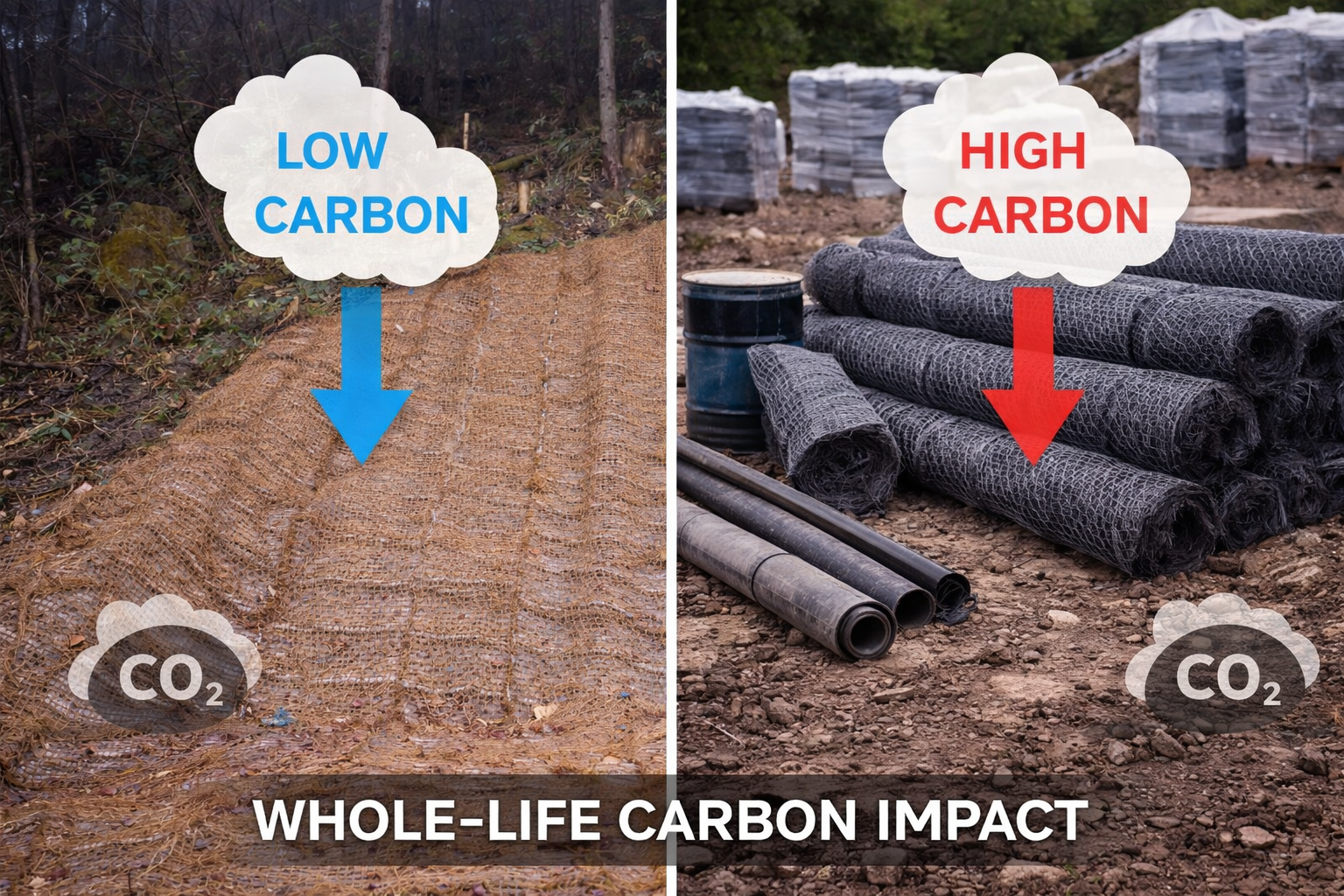
As infrastructure delivery aligns with national and organisational net zero strategies, the concept of value is evolving. Increasingly, it is not just the financial cost of a material that matters, but its carbon cost across the entire lifecycle.
Embodied Carbon vs Operational Carbon
Within geotechnical works, operational carbon, emissions generated during the use phase of an asset, is often relatively low. Unlike buildings or transport systems, earthworks typically do not consume energy once constructed.
The primary carbon impact therefore lies in embodied carbon, which includes:
- Raw material extraction
- Manufacturing processes
- Transportation
- Installation
- End of life treatment or disposal
For erosion control and ground engineering materials, this distinction is critical. The carbon footprint is largely front-loaded, meaning that decisions made at the specification stage have a disproportionate impact on overall project emissions.
The overlooked impact of temporary works
Temporary works, including erosion control systems, slope protection measures and enabling infrastructure, are often treated as secondary considerations within carbon assessments.
In practice, however, they can represent a significant and frequently overlooked source of emissions.
Synthetic erosion control systems, for example, may:
- Require energy intensive manufacturing processes
- Involve polymer based materials derived from fossil fuels
- Remain in place long after their functional role has been fulfilled
Despite being classified as “temporary,” their environmental impact can be effectively permanent.
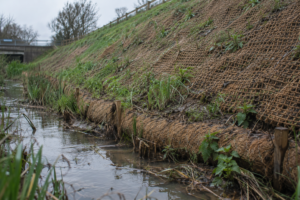
By contrast, natural fibre systems are inherently aligned with temporary performance requirements. Their lifecycle is:
- Shorter
- Materially less carbon intensive
- Consistent with the duration of their engineering function
This alignment reduces both embodied carbon and long term environmental burden.
End of Life: the hidden liability
One of the most significant, and often underestimated aspects of whole life carbon is end of life treatment.
Persistent synthetic materials introduce challenges such as:
- Difficulty of removal from established landscapes
- Contamination of soil systems
- Landfill disposal or long term environmental persistence
These outcomes carry not only environmental consequences, but also potential future liabilities regulatory, financial and reputational.
Natural fibre systems, by contrast, are designed to:
- Biodegrade in situ
- Integrate into the soil profile
- Leave no residual synthetic footprint
From a whole life perspective, this represents a materially different risk profile.
Integrating carbon into procurement decisions
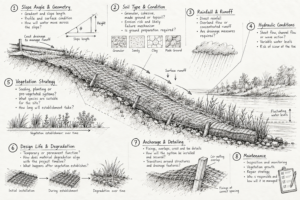
For procurement teams and design consultants, incorporating carbon considerations requires a more holistic evaluation framework.
This includes:
- Assessing embodied carbon alongside cost and performance
- Considering the duration of functional requirement
- Evaluating end of life outcomes and associated risks
- Aligning material choices with ESG and policy objectives
Such an approach moves procurement beyond short term cost efficiency towards long term value and accountability.
Conclusion: from cost based to carbon informed engineering
The transition to low carbon infrastructure is not solely a matter of adopting new technologies. It requires a fundamental shift in how engineering decisions are made particularly at the level of material specification.
The most cost effective solution is no longer defined by its purchase price alone, but by its total impact over time.
For earthworks and erosion control, this means recognising that:
- Temporary systems can have permanent consequences
- Material persistence carries carbon and environmental costs
- Specification decisions are, ultimately, carbon decisions
At Salike®, we advocate for an approach that integrates engineering performance with environmental responsibility enabling infrastructure to be delivered not only efficiently, but intelligently.
In this context, natural fibre systems are not simply sustainable alternatives. They represent a more precise alignment between functional performance, lifecycle duration and carbon impact a critical step towards truly responsible engineering.